英语
 西班牙语
 简体中文
Industry News
Home / News / Industry News / Food packaging machine: Applications, Selection Criteria, and Practical Guidance
Content
If you have ever stood at the end of a food line and watched a good machine run, you know the feeling. The bags form cleanly, the fill weight stays steady, the seal looks right, and the line keeps moving without drama. You also know the opposite feeling: powder dusting into the seal, sauce dripping onto the pouch lip, or a film that refuses to track straight. A food packaging machine is not just a piece of equipment on a quotation. It is a daily working partner on the factory floor.
At Soontrue Huihe, we have learned that the best conversations about packaging start with the food itself. What is the product? How does it flow, settle, smear, crumble, or dust? What package does the customer want to hand to the shopper? And what output must the line hit on a normal Tuesday, not only on a good day? Those questions usually matter more than a long list of specifications.
The same food packaging machine can behave very differently depending on what goes inside the bag. Flour, sugar, coffee beans, ketchup, honey, frozen vegetables, and tea bags all ask for different feeding, measuring, and sealing approaches. A powder may bridge in a hopper or create dust that interferes with sealing. A granule may need gentle handling to avoid breakage. A sauce may be thick, sticky, or temperature-sensitive. A solid product may need a horizontal wrapper rather than a vertical form-fill-seal machine.
That is why we prefer to look at three things together: the product, the package format, and the production target. A machine that fills a stand-up pouch at 30 packs per minute may not be the right choice for a sachet line running at 120 packs per minute. A simple semi-automatic sealer can be a sensible start for a small food producer, while a factory with multiple shifts may need a fully automatic line with weighing, filling, sealing, and case packing. Neither choice is “better” in isolation. The right one fits the work.
When customers ask where to begin, we often use a simple map. Most food packaging projects fall into a few broad families, even though the details vary by product and package style.
| Machine family | Typical food products | Common package styles | What to check first |
|---|---|---|---|
| Vertical form-fill-seal machine | Powders, granules, snacks, coffee, sugar, liquids | Pillow bags, gusseted bags, sachets, stick packs | Dust control, film tension, seal jaw condition |
| Horizontal flow wrapper | Bars, cookies, vegetables, whole chicken, bakery items | Flow-wrap pillow packs | Infeed handling, product spacing, film alignment |
| Premade pouch filler | Coffee, nuts, sauces, snacks, grains | Stand-up pouches, zipper bags, spouted pouches | Pouch opening, fill accuracy, seal contamination |
| Vacuum chamber machine | Meat, cheese, ready meals, marinated foods | Vacuum bags and barrier bags | Chamber size, seal bar length, cycle time |
| Cup sealing machine | Yogurt, drinks, desserts, ready-to-eat cups | Sealed cups and trays | Cup tolerance, film registration, clean sealing |
| Carton sealer and case packing | Finished food cartons and retail cases | Corrugated cases and trays | Case size range, tape or glue, line speed |
The table is a starting point, not a final answer. Many food factories need more than one machine family because the product range includes both retail pouches and shipping cartons, or both wrapped bars and bagged snacks. The useful question is not “Which machine is best?” but “Which combination gives us a clean package at the output we actually need?”
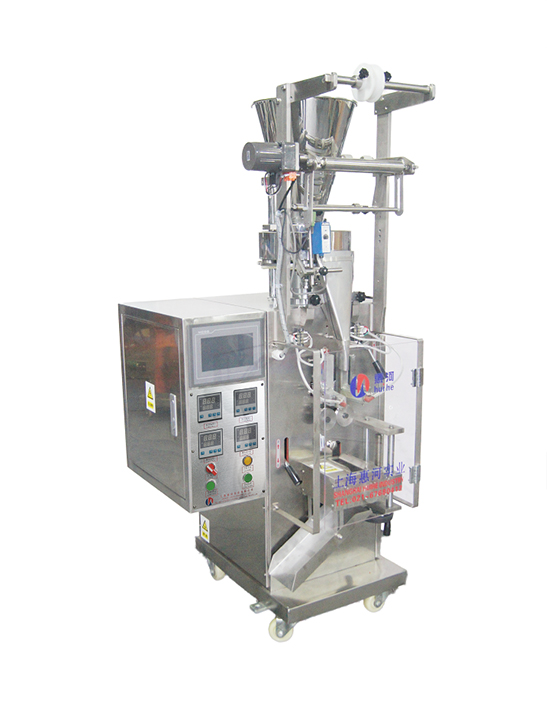
Powdered foods are often the most demanding place to start. Flour, spice blends, milk powder, cocoa, and instant drink mixes can become airborne during filling. That dust may settle on the pouch sealing area, weaken the seal, or create a messy package that looks unprofessional on the shelf. A good powder packaging machine combines an appropriate auger or servo measuring system with dust extraction, good hopper design, and a sealing area that stays clean. We also look at how the powder flows, whether it bridges, and how much weight variation the customer can accept.
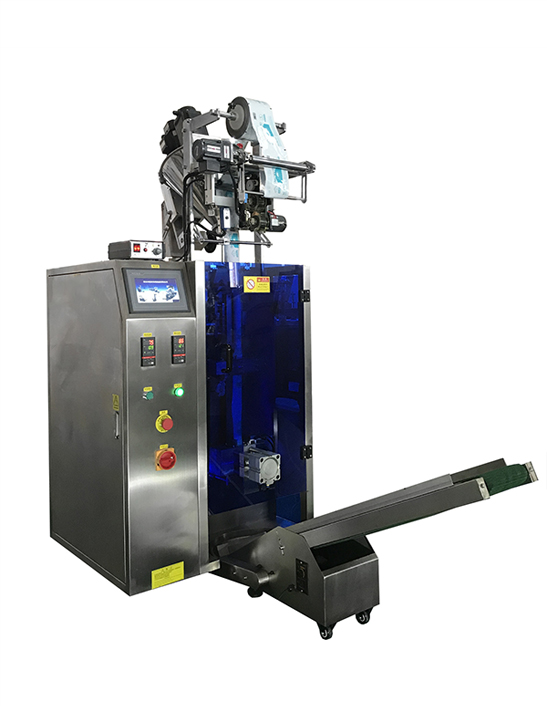
 DXDF-300 Automatic Powder Packing Machine with Back Side SealDXDF-300 handles bag making, filling, sealing, cutting and counting, with screw measurement, PID temperature control and 0–350 ml range for powder products.View Product →
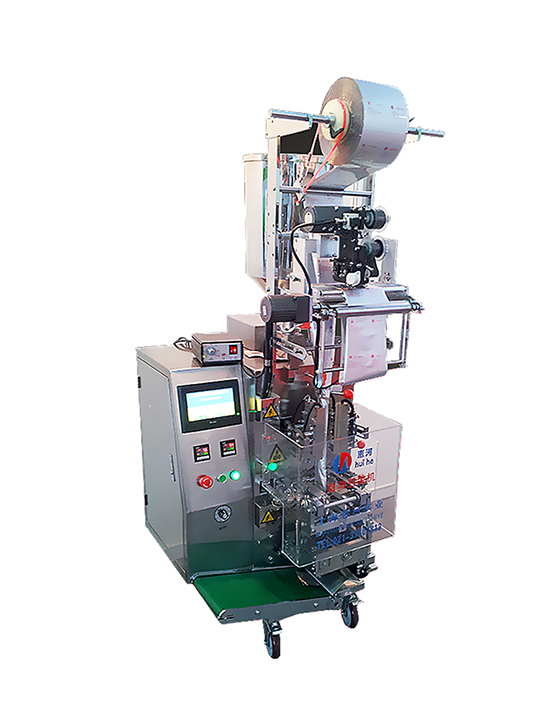
Sugar, rice, beans, nuts, coffee beans, and snack pellets behave differently from powder. They flow more freely, but they can break, settle unevenly, or bounce during filling. Depending on the product and output, a granule packaging machine may use a volumetric cup, a linear weigher, or a multi-head combination scale. For a small food business, a compact vertical machine with a simple measuring system may be enough. For a larger line, weigh accuracy and speed become more important, and the infeed and discharge sections deserve as much attention as the filler itself.
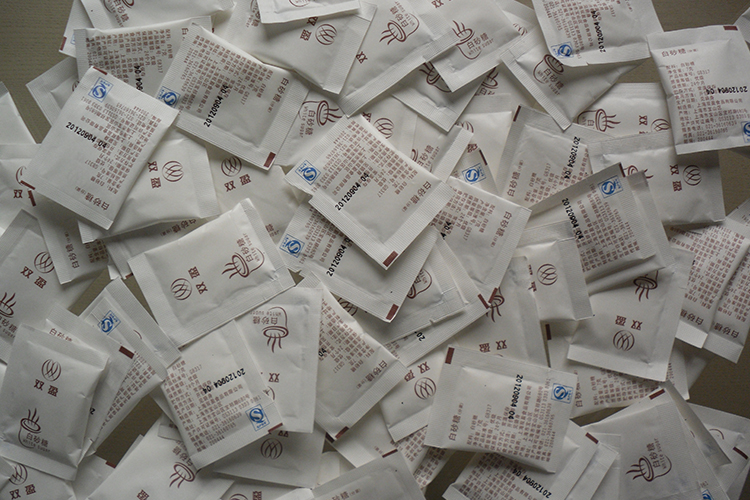 DXDK-80Z High Speed Granule Packing MachineDXDK-80Z makes 3- or 4-side sealed bags at 50–110 bags/min, using step-motor metering and four-side heating for granule products.View Product →
In both powder and granule projects, we ask for a real product sample whenever possible. A sample tells us more than a specification sheet. It shows how the product moves, whether it clumps, and how it behaves when the machine cycles at production speed.
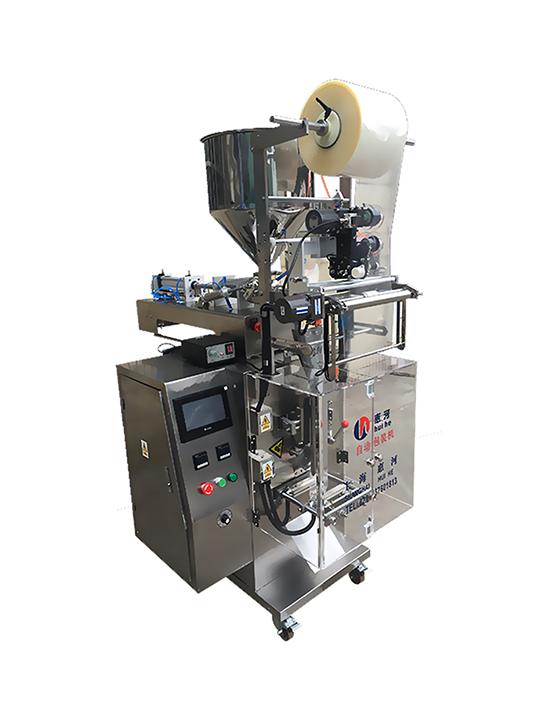
Sauces, honey, ketchup, fruit purees, edible oils, and liquid seasonings bring another set of questions. Viscosity, temperature, and particle size affect how the product flows through pumps, nozzles, and filling heads. A thin liquid may splash; a thick paste may string or drip. Both can contaminate the seal area if the filling point is not managed well. We look at the product’s behavior at room temperature and at production temperature, then match the pump, nozzle, and pouch opening to that behavior.
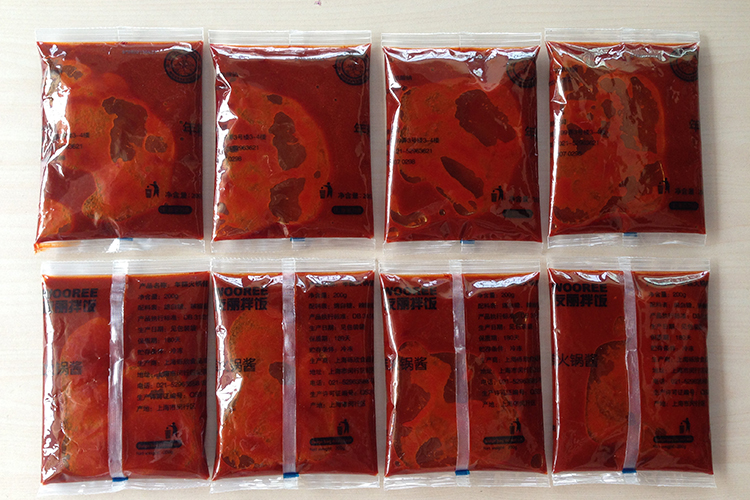 DXDL-300 Automatic Liquid Paste Packing MachineDXDL-300 uses piston-pump measurement and back-side-seal bags at 30–60 bags/min for liquid and paste products.View Product →
For liquid and paste foods, clean filling is often more valuable than raw speed. A slightly slower machine that fills neatly, avoids drips, and produces a reliable seal can be the better long-term investment. The package also matters. A spouted pouch, a flat sachet, and a stand-up pouch each need a different filling and sealing approach, even when the food inside is the same.
Speed is easy to put on a brochure. It is harder to keep a line running well through a full shift. When comparing food packaging machines, we encourage customers to look at the details that affect daily use:
A machine that is easy to clean, adjust, and maintain often earns its place faster than a machine with a higher headline speed. This is especially true for smaller food producers who run several products on one line.
Before requesting a quotation, gather a few practical details. This helps the supplier recommend a realistic machine instead of guessing. For a more detailed walkthrough, see this practical guide to buying a packing machine for food products.
These details may seem basic, but they prevent many misunderstandings. A food packaging machine is a capital investment, and a clear brief is one of the simplest ways to protect it.
Choosing a food packaging machine is rarely about finding the biggest or fastest option. It is about finding the machine that fits the food, the package, the people who will run it, and the service network behind it. We would rather help a customer choose a practical machine that runs well every day than push a specification that looks impressive but creates problems at the seal jaw or on the changeover bench.
Whether you are packing powder, granules, liquids, pastes, tea, coffee, or a mixed food range, start with the product and the package. Then build the line around them. That is the approach we bring to every packaging conversation, and it is usually the one that keeps a food factory running calmly long after the quotation is signed.
Copyright © Soontrue Huihe Automation Equipment (Shanghai) Co.,LtdAll Rights Reserved. Custom Packaging Machinery Manufacturers