英语
 西班牙语
 简体中文
Industry News
Home / News / Industry News / Food Packaging Machine Guide: Types, Buying Tips and Maintenance Needs
Content
Behind every bag of sugar, jar of honey or tray of chicken on a supermarket shelf, there is a machine that filled it, weighed it or sealed it - often thousands of times an hour, and usually without anyone standing beside it. That is the quiet world of food packaging machinery. If you are comparing options for your own plant right now, the range can feel overwhelming and the spec sheets rarely help.
We have been building packaging equipment since 2006, with factories in Shanghai, Guangdong and Hebei and service offices in the United States, Thailand, India, Bangladesh and Japan. What follows is roughly how we walk a customer through the decision, starting with the food itself rather than with a catalogue.
Strip away the terminology and almost every food packaging machine does three jobs at once: it portions, it protects and it presents.
Portioning is the measuring step - an auger screw for powder, a multi-head weigher for granules, a piston or lobe pump for sauces, a counting disc for tablets. Protecting is the sealing and atmosphere step: a clean seal keeps moisture out, vacuum or gas flushing keeps oxygen away, and a readable date code keeps the supply chain honest. Presenting is everything the shopper sees, from bag shape and print registration to an easy-tear notch or a resealable zip.
A machine that does only one of those well is a machine you will fight with for years. Most of the selection work is finding the combination that manages all three within your output target and your budget.
The most useful question we ask a new customer is not "how many bags per minute" but "what exactly goes into the bag". Viscosity, bulk density, particle size, stickiness, fragility and dust all push you toward or away from a machine family long before price is discussed.
| Food form | Usual machine family | Foods we see it on | What to check first |
|---|---|---|---|
| Free-flowing powder | Auger-dosed vertical form fill seal | Flour, milk powder, spice blends, cocoa | Screw size, dust control, seal quality on fine powder |
| Granules and small pieces | Multi-head weigher or volumetric cup filler | Sugar, rice, nuts, snacks, frozen vegetables | Weighing accuracy, drop height, film stiffness |
| Liquids and pastes | Piston, pump or gravity filler | Ketchup, honey, sauces, juice, edible oil | Viscosity range, spout or valve options, cleaning access |
| Shaped solid items | Horizontal flow wrapper | Biscuits, bread, whole chicken, fresh produce | Product length range, belt speed, film tension control |
| Tea and coffee | Specialty bagging machines | Leaf tea, drip coffee, nylon pyramid bags | Thread and tag, inner and outer bag, filter paper grade |
| Cups and trays | Rotary or inline cup sealer | Yoghurt, pudding, bubble tea, ready meals | Cup diameter range, film registration, gas flush option |
Once the food form is clear, output and packaging format narrow the field quickly. A 40 bags-per-minute line and a 120 bags-per-minute line may share the same sealing principle, but they rarely share the same frame, drive or control system.
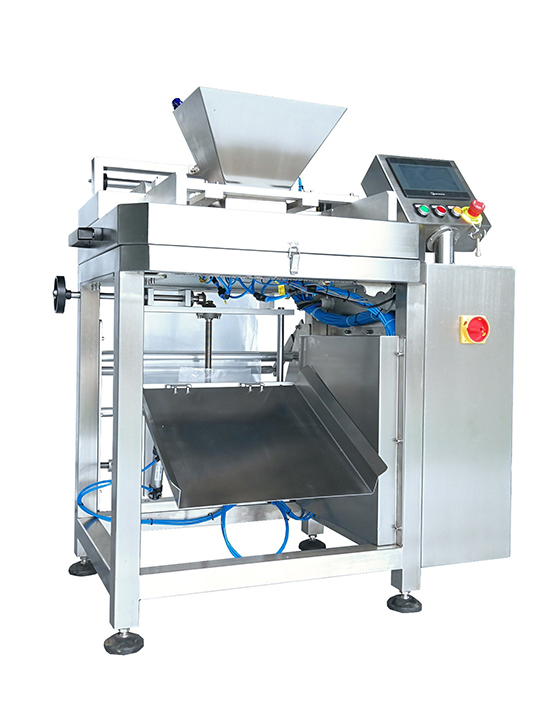
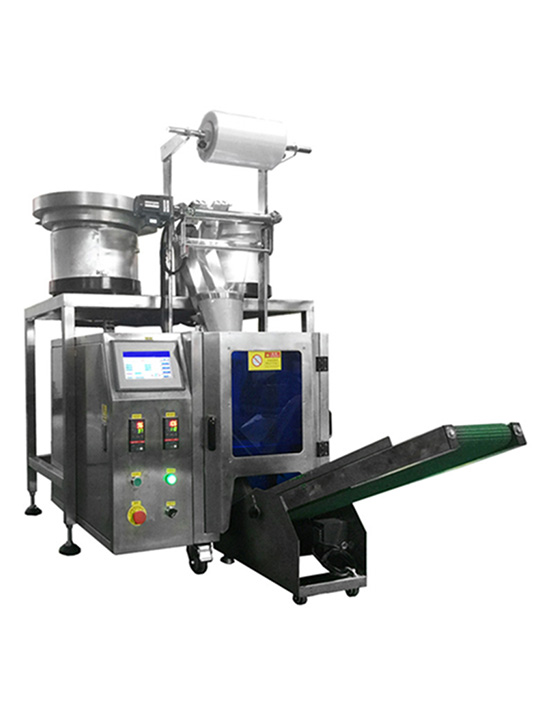
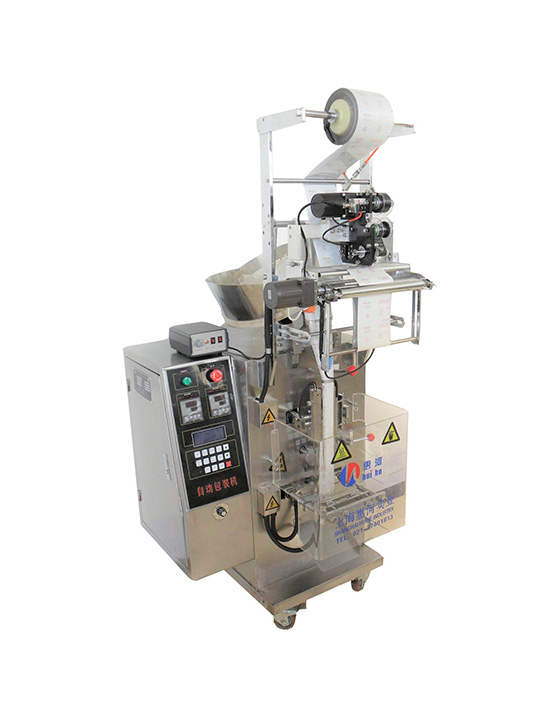
A flat roll of film is formed into a tube, filled, sealed and cut in one continuous motion. Vertical form fill seal machines dominate powder, granule and liquid bagging because they are compact, fast and flexible on bag style: pillow bags, gusseted bags, three-side and four-side seals, and round-corner shapes for a more premium shelf look.
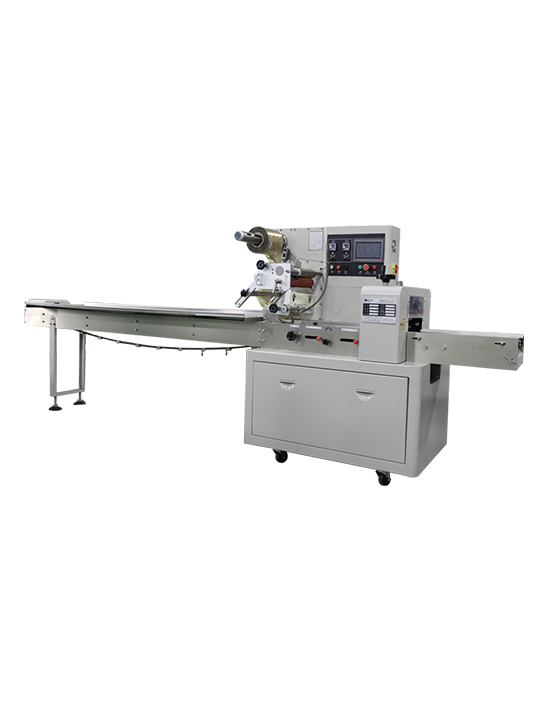
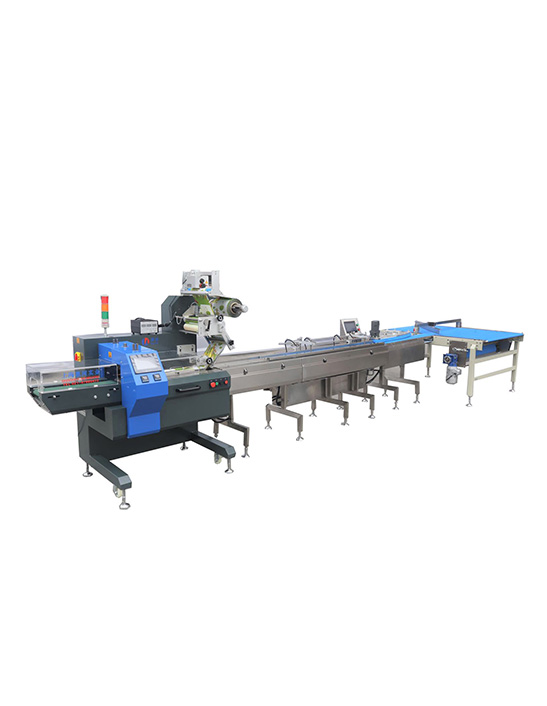
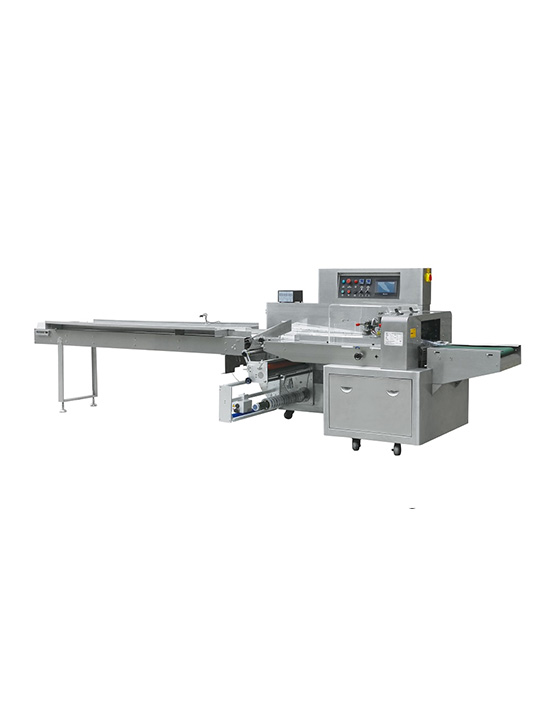
Instead of forming a bag around a falling product, a flow wrapper lays the item on a moving film web and folds the film around it. It suits biscuits, bakery items, confectionery, fresh vegetables and irregular pieces such as whole poultry. Servo-driven versions handle delicate products with less damage and hold print registration tightly.
For fresh produce, where a bruised leaf costs as much as a bad seal, a gentle servo wrapper with an automatic feeding system is often the right answer.
 HP-600XD Servo Vegetable Packing MachineA horizontal servo-driven packer for fresh vegetables, with stainless-steel construction, no-material no-bag film saving, and fault diagnostics for stable produce packaging.View Product →
When the pack is part of the brand - a stand-up pouch with a zip, a spout bag, a shaped doypack - a machine that picks and opens a ready-made pouch usually gives a cleaner finish than a form fill seal unit. Changeover between pouch styles is quick and the film never has to survive a forming shoulder. You can browse the range of automatic premade bag packaging machines to see how the dosing head changes with the product.
The bagging frame gets the attention, but the dosing head decides your giveaway and your reject rate. Auger fillers suit flour and spices, volumetric cups and multi-head weighers suit sugar and rice, piston fillers with rotary valves suit ketchup and sauces, and servo pumps handle thin liquids and edible oil.
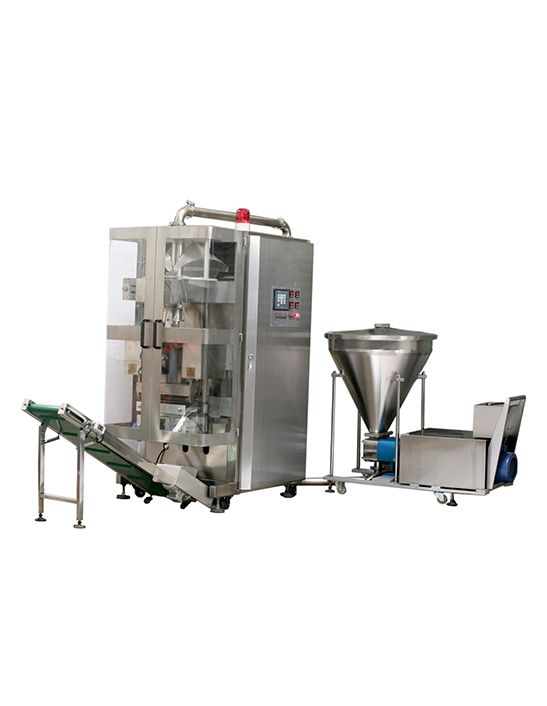
 Automatic Powder Packing Machine with 3/4-Side SealA PLC-controlled powder bagger for 3- or 4-side-seal bags, with screw dosing, PID temperature control, and 20–60 bags/min across DXDF-240/300 models.View Product →
The same frame that fills a 100 g sachet of pepper can usually fill a 1 kg bag of flour, provided the auger and the film path are specified for both from the start.
Tea and coffee are their own discipline. Filter paper, thread, tags, inner and outer envelopes and pyramid-style nylon bags need handling that a general-purpose bagger cannot provide. If you pack leaf tea or drip coffee, look specifically at tag-and-thread machines and inner and outer bag configurations, because much of the labour saving comes from the envelope rather than from the filling.
Not every food pack is a bag. Chamber vacuum machines extend shelf life for meat, cheese and prepared meals; cup sealers close yoghurt, desserts and bubble tea; shrink wrappers, carton sealers and palletising equipment handle the tray and shipping case. A complete line often mixes three or four of these families, which is why layout planning matters as much as the individual machines.
Packaging material is where food safety and environmental pressure meet. A well-matched machine lets you reduce film thickness without losing seal strength, which cuts material cost and plastic weight in the same move. Gas flushing and vacuum let you trade some barrier plastic for atmosphere control.
If mono-material or paper-based films are on your roadmap, say so at the enquiry stage. Recyclable films are often stiffer and have a narrower sealing window, so the jaws, temperature control and cooling time should be specified for them from the beginning rather than adjusted afterwards.
Most calls to our service desks are not breakdowns; they are drift. A sealing jaw running three degrees cooler than it did last month, a worn auger, a photocell with flour dust on the lens. A short daily routine prevents the majority of unplanned stops.
No two food products behave exactly alike. Maltodextrin dusts differently from cocoa, and a chunky sauce shears differently from a smooth one. That is why we still prefer a product trial before quoting, and why our engineers ask about ambient humidity, shift patterns and how the packed product will be stored.
Our equipment runs in food plants across more than 80 countries, from small tea packing rooms to automated lines that end with a robot palletiser. The practical value of that spread is simple: fewer surprises on your installation day.
If you are still at the beginning, this guide on how to buy a suitable packing machine for food products is a sensible read before you start comparing quotations. Or just describe your product to us and send a sample - we will tell you honestly what will work, and what will not.

Copyright © Soontrue Huihe Automation Equipment (Shanghai) Co.,LtdAll Rights Reserved. Custom Packaging Machinery Manufacturers