英语
英语 西班牙语
西班牙语 简体中文
简体中文Industry News
Home / News / Industry News / How Do You Choose the Right Premade Bag Packing Machine for Your Production Line?
Content
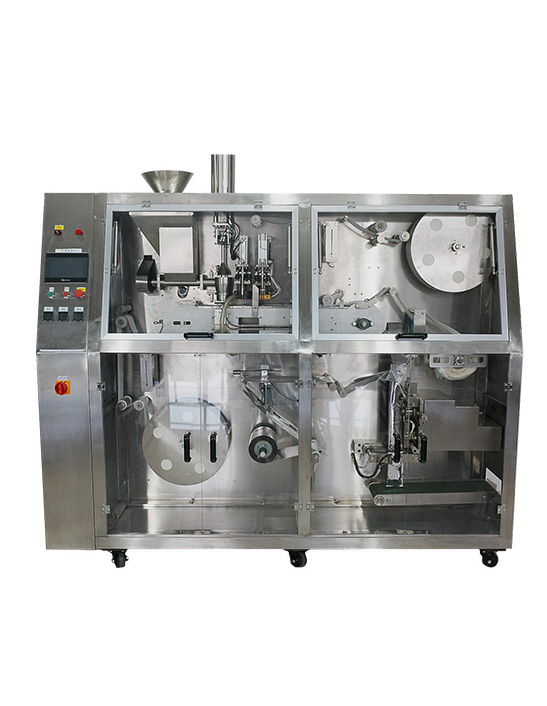
A premade bag packing machine is an automated packaging system that fills and seals pre-manufactured bags rather than forming bags from a continuous roll of film during the packaging process. Unlike form-fill-seal (FFS) machines that create the bag in-line, premade bag packers receive finished pouches — already cut, shaped, and often printed — from a magazine or conveyor feed, then automatically open each bag, fill it with the product, and seal it closed before discharge. This approach offers distinct advantages in terms of package quality, material flexibility, and changeover speed that make it the preferred solution across a wide range of food, chemical, agricultural, and consumer goods packaging applications.
The operational sequence of a premade bag packing machine follows a consistent cycle regardless of the specific machine design. Bags are loaded into a magazine gripper system that picks individual bags one at a time and transfers them through a series of workstations arranged around a rotary turret or along a linear track. At each station, a specific operation is performed: the bag mouth is opened by suction cups, the product is dispensed by a weigher or volumetric filler, the headspace is managed by air removal or gas flushing if required, and finally the bag mouth is sealed by heat, ultrasonic energy, or zipper press depending on the bag type. The entire cycle repeats continuously at speeds that typically range from 20 to 120 bags per minute depending on the machine size, bag format, and product characteristics.
The premade bag packing machine category encompasses several distinct machine architectures, each optimized for different bag formats, product types, and production volumes. Selecting the correct machine type is the single most important decision in a premade bag packaging project, as the wrong architecture will limit throughput, restrict bag format options, or compromise seal quality regardless of other specification choices.
Rotary machines arrange their workstations around a central turret with gripper pairs mounted at equal angular intervals around its circumference. As the turret indexes, each bag moves simultaneously from one station to the next, so all operations occur in parallel rather than sequentially. This parallel processing architecture is what enables rotary machines to achieve the highest throughput rates in the premade bag category — a 10-station rotary machine performing a complete cycle in three seconds effectively processes over 100 bags per minute because ten bags are being processed simultaneously at any given moment. Rotary machines are the dominant technology for high-speed production of snack foods, pet treats, frozen vegetables, and similar high-volume consumer products where line efficiency is the primary economic driver.
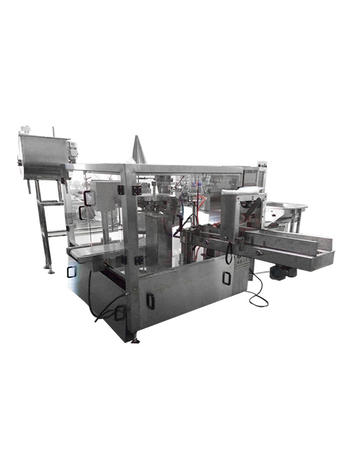
Linear machines transport bags in a straight line through successive workstations rather than around a turret. This architecture accommodates longer processing times at individual stations without slowing overall throughput, making it particularly well suited to products requiring extended fill times — such as large-format bags of granular products, liquids that foam during filling, or items that must be carefully placed rather than gravity-fed. Linear machines also handle a wider range of bag sizes in a single configuration and are generally easier to clean and maintain than rotary machines because all components are accessible from the sides of the machine without removing the turret assembly. They are the preferred choice for applications in the chemical, agricultural, and industrial sectors where bag sizes are large and throughput requirements are moderate.
Within both rotary and linear categories, machines can operate in either intermittent motion (index-and-dwell) or continuous motion modes. Intermittent machines stop each bag briefly at each workstation to allow filling and sealing operations to be performed on a stationary bag — this simplifies the mechanical design and is adequate for most packaging speeds up to approximately 60 bags per minute. Continuous motion machines keep bags moving at constant speed while filling and sealing heads travel with the bag during their operating stroke, then return to starting position for the next cycle. Continuous motion achieves higher throughput and produces gentler handling of fragile products, but requires significantly more complex servo-driven mechanical systems and higher capital investment.
One of the most compelling advantages of premade bag technology is its ability to handle bag formats that are difficult or impossible to produce reliably on in-line form-fill-seal equipment. The range of compatible bag styles is extensive, and matching the correct format to the product and the retail presentation requirements is a critical part of the packaging system design process.
| Bag Format | Typical Products | Key Feature |
| Stand-Up Pouch (Doypack) | Snacks, pet food, coffee, nuts | Self-standing, high retail visibility |
| Flat Bottom Pouch | Coffee, premium food products | Superior shelf stability, premium appearance |
| Zipper Reclosable Pouch | Cheese, dried fruit, baby food | Consumer convenience, resealability |
| Spout Pouch | Beverages, sauces, baby food | Liquid-tight, pour-friendly dispensing |
| Pillow Bag | Confectionery, frozen foods | Simple, cost-effective, high-speed compatible |
| Quad Seal Bag | Coffee, dry ingredients, powders | Four-sided gussets, maximum volume capacity |
Stand-up pouches and flat-bottom bags are particularly difficult to produce consistently on FFS equipment because their complex gusset structures require precise forming that is hard to maintain at high speed with thin laminate films. Premade bags sourced from specialist pouch manufacturers arrive with these structures already formed and tested, ensuring that every bag opened on the packing machine has correct dimensions and intact seals before any product is added. This upstream quality control is one of the primary reasons that premium product categories — specialty coffee, organic pet food, health supplements — have largely migrated to premade bag packing systems.
The filling system integrated into or connected to the premade bag packing machine determines the accuracy, speed, and product compatibility of the overall packaging line. Different product types require fundamentally different filling technologies, and specifying the wrong filler for a given product results in unacceptable weight variation, product spillage, bag contamination, or seal integrity failures.
Combination weighers — commonly known as multihead weighers — are the standard filling solution for free-flowing granular, piece, or irregular products such as snack foods, frozen vegetables, hardware items, and pet treats. A multihead weigher distributes product across a series of radial pool hoppers and weigh hoppers, then uses a combinatorial calculation algorithm to identify which combination of hoppers produces a total weight closest to the target weight before releasing that combination simultaneously into the bag below. Modern 14-head or 16-head weighers achieve weight accuracies within ±0.5g of target weight at speeds exceeding 100 cycles per minute, making them the most accurate and productive filling technology available for appropriate product types.
Auger filling systems use a rotating screw within a cylindrical tube to dispense measured volumes of powder or fine granular material into bags. The auger is typically positioned directly above the open bag mouth and rotates for a precisely controlled number of turns to deliver each dose. Auger fillers are the preferred technology for products such as flour, spices, protein powder, ground coffee, and pharmaceutical powders because they handle dusty, cohesive, or aerated materials more reliably than gravity-based systems. Servo-driven auger fillers with load cell verification can achieve fill accuracies of ±1% or better on most dry powder products and are compatible with dust extraction systems that capture airborne particles generated during the fill cycle.
For liquid products — sauces, beverages, oils, and fluid pastes — premade bag packers integrate piston fillers, peristaltic pump fillers, or flow meter-based filling systems depending on the viscosity and particulate content of the product. Piston fillers use a precisely machined cylinder and plunger to displace a fixed volume of product per stroke and handle viscous products with particulate inclusions such as chunky salsa or fruit preserves effectively. Peristaltic pumps pass product through a flexible tube that is progressively compressed by rotating rollers, making them ideal for highly viscous or shear-sensitive products because the product never contacts any metal pump components — a critical requirement in pharmaceutical and nutraceutical liquid filling where contamination avoidance is paramount.
When evaluating premade bag packing machines from different suppliers, comparing specifications requires understanding which parameters have the greatest impact on real-world production performance and total cost of ownership. Headline speed figures are frequently overstated or measured under ideal conditions that do not reflect actual production environments.
The capital cost of a premade bag packing machine represents only a fraction of the total investment required to operate it productively over its service life. Evaluating competing machines purely on purchase price without accounting for operating costs leads consistently to poor long-term economic outcomes. A thorough total cost of ownership analysis should incorporate bag material cost, consumable component replacement, energy consumption, maintenance labor, and the cost of downtime from unplanned stoppages.
Premade bags cost more per unit than the equivalent amount of roll film used in a form-fill-seal system — typically 15% to 30% more depending on bag complexity and order volume. However, this cost premium is frequently offset by higher bag rejection rates and material waste on FFS equipment, reduced labor costs from simpler operation and faster changeover, superior package presentation that commands higher retail pricing, and lower maintenance costs from a simpler bag handling mechanism. Facilities switching from FFS to premade bag technology should model their total per-unit packaging cost using actual bag prices from qualified pouch suppliers before concluding that FFS offers a cost advantage.
Maintenance cost projection should include the replacement frequency and cost of wear components including gripper jaw inserts, suction cup assemblies, seal bar coatings, and conveyor belts. Request a recommended spare parts list and annual spare parts budget estimate from each machine supplier during the evaluation process. Suppliers who cannot provide this information clearly during the sales process are likely to be difficult partners when unplanned maintenance requirements arise during production. Proximity of the supplier's service network to your facility and the availability of factory-trained service engineers for emergency callout are equally important factors that significantly affect the real cost of machine ownership over a five to ten year operational horizon.
Copyright © Soontrue Huihe Automation Equipment (Shanghai) Co.,LtdAll Rights Reserved. Custom Packaging Machinery Manufacturers