Content
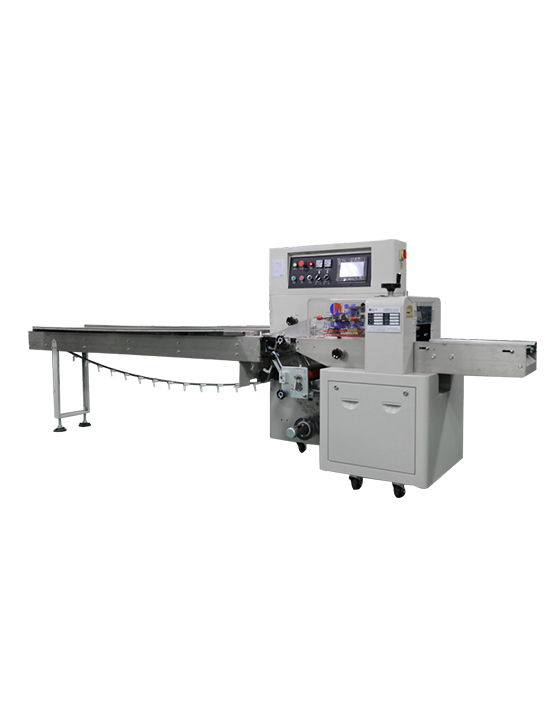
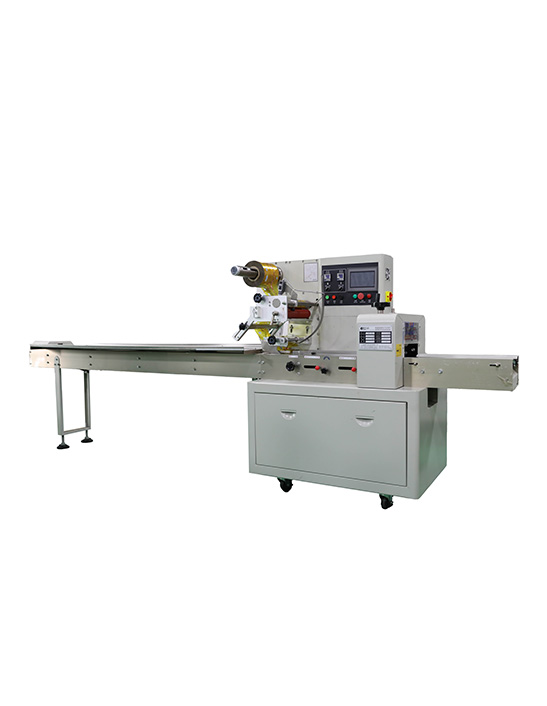
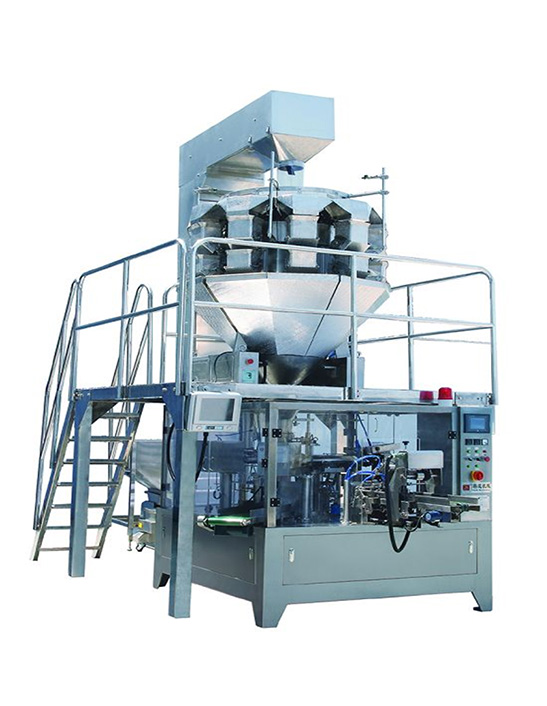
Horizontal packaging machines commonly referred to as horizontal form-fill-seal (HFFS) machines or flow wrappers, orient the product and the film on a horizontal plane throughout the entire packaging process. A roll of flat film is unwound, formed into a tube around the product as it travels along a conveyor, and then sealed longitudinally along the bottom and transversely at both ends to create a finished, sealed pack. This horizontal orientation stands in direct contrast to vertical form-fill-seal (VFFS) machines, which form the package from above and rely on gravity to drop free-flowing products — such as snack foods, nuts, or powders — into the forming tube below.
The structural difference in orientation is not merely a geometric detail; it determines which products can be packaged, how gently they are handled, what seal quality is achievable, and how easily the machine integrates into a broader production line. Horizontal machines accept products that have a defined, stable shape and that cannot be dropped or tumbled without damage — items such as chocolate bars, biscuits, bakery products, medical devices, soap bars, and fresh produce. Understanding this foundational distinction is the starting point for appreciating why horizontal packaging machines offer specific, concrete advantages that vertical systems cannot replicate for a wide range of products and industries.
One of the most significant practical advantages of horizontal packaging machines is their ability to handle fragile, irregularly shaped, or structurally sensitive products without causing damage during the packaging process. Because the product travels horizontally on a conveyor or in a series of lugs or flights, it is supported continuously from below and never subjected to a free-fall drop or an abrupt change in orientation. This controlled, gentle transport is critical for products that would crack, crumble, deform, or lose visual appeal if handled roughly.
Consider a filled croissant, a chocolate-coated biscuit, or a blister-packed pharmaceutical tablet strip. Each of these items has a defined geometry that must be preserved intact through to the finished package. A vertical machine cannot accommodate these products because the drop-fill mechanism and the vertical tube geometry are fundamentally incompatible with shaped solids. A horizontal flow wrapper, by contrast, feeds these items in a precise orientation — often via an upstream conveyor or robotic pick-and-place system — and wraps the film around them with consistent, controllable tension. The result is a package that presents the product exactly as intended, with no crushing, crumbling, or positional distortion.
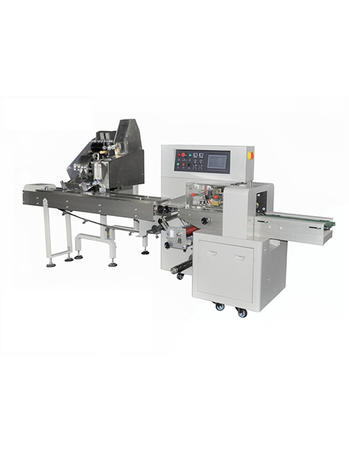
Horizontal packaging machines are capable of extremely high production speeds, making them well suited to high-volume manufacturing environments where throughput directly determines profitability. Entry-level flow wrappers operate at speeds of 100 to 200 packs per minute, while high-performance servo-driven models can exceed 600 packs per minute on suitable products. This speed is achievable because the horizontal orientation allows the film forming, product infeed, longitudinal sealing, and end sealing operations to occur simultaneously on a continuous or intermittent-motion basis without the mechanical constraints imposed by gravity-dependent filling.
Modern horizontal machines equipped with servo motor drives deliver additional speed benefits through rapid, recipe-driven changeover. Servo systems allow the machine to store product-specific parameters — including film tension, sealing temperature, jaw timing, and conveyor speed — and recall them instantly when switching between SKUs. This eliminates the lengthy manual adjustment cycles associated with older mechanically-driven machines and dramatically reduces changeover downtime, which is one of the most significant sources of lost production capacity in high-mix manufacturing environments. For a facility running ten or more different product formats across a single shift, the cumulative time saving from servo-enabled quick changeover can amount to hours of recovered production per week.
Seal integrity is a non-negotiable requirement in food, pharmaceutical, and medical device packaging. A failed seal allows oxygen and moisture ingress that degrades product quality, enables microbial contamination, and in regulated industries can constitute a serious compliance breach. Horizontal packaging machines consistently produce high-quality seals because the sealing process occurs under controlled, mechanically precise conditions that are difficult to replicate in other packaging formats.
The fin seal or lap seal formed along the underside of the package is created by sealing bars that apply consistent heat and pressure across the full length of the seal zone as the film moves continuously through the machine. The end seals — formed by rotary or reciprocating jaw systems — apply heat and pressure perpendicular to the direction of travel and are timed precisely to seal between products rather than across them. On servo-driven machines, the dwell time, temperature, and pressure of both seal systems can be tuned independently for each film type and thickness, ensuring that the seal is strong and consistent even when switching between laminate structures with different heat-seal layers.
For modified atmosphere packaging (MAP) applications — where the headspace inside the package is flushed with a protective gas mixture to extend shelf life — horizontal machines accommodate gas injection nozzles within the forming section, delivering a controlled atmosphere to the pack immediately before end sealing. This is particularly valuable in the fresh food and ready-meal sectors, where shelf life extension through MAP is a commercial imperative and seal integrity directly determines how long the product remains saleable.
The range of industries that rely on horizontal packaging machines is broad, and the versatility of the format is one of its defining commercial strengths. The same fundamental machine architecture — horizontal conveyor infeed, film forming tube, longitudinal seal, end seal — can be configured to handle an enormous variety of products simply by adjusting the forming box size, film specification, sealing parameters, and infeed system.
| Industry | Typical Products Packaged | Key Requirement Met |
| Food and Confectionery | Chocolate bars, biscuits, bakery goods, cereal bars | High speed, gentle handling, hermetic sealing |
| Fresh Produce | Cucumbers, lettuce, mushrooms, herbs | MAP compatibility, non-damaging infeed |
| Pharmaceuticals | Blister packs, tablet strips, medical devices | Seal integrity, traceability, cleanroom compatibility |
| Personal Care and Household | Soap bars, razors, sponges, wipes | Precise sizing, printed film registration |
| Industrial Components | Fasteners, tools, electronic parts | Dimensional accuracy, durable seals |
This cross-industry applicability means that a manufacturer who invests in a horizontal packaging machine is acquiring a platform that can adapt as their product range evolves, rather than a single-purpose machine that becomes redundant if the product mix changes. Many facilities use the same base machine across seasonal product lines, simply swapping forming boxes and film rolls to transition from one SKU to another.
Horizontal packaging machines are compatible with an extensive range of packaging films, and this material flexibility is an important operational advantage. The choice of film affects shelf life, barrier properties, sustainability credentials, print quality, and consumer appeal, so the ability to run different film types on the same machine without major modification gives manufacturers meaningful control over their packaging strategy.
A horizontal packaging machine rarely operates in isolation. In a modern production facility, it is typically the central node in a connected line that includes upstream processing or portioning equipment, infeed conveyors, checkweighers, metal detectors, vision inspection systems, and downstream secondary packaging machinery such as cartoners or case packers. The horizontal orientation of the machine makes this integration inherently straightforward because the product enters and exits the machine on a flat conveyor plane that aligns naturally with the rest of the production line.
Integration with upstream automation is particularly well developed. Robotic pick-and-place systems — often using delta or SCARA robot configurations — are widely used to receive products from a processing line, orient them correctly, and place them into the infeed lugs of the packaging machine at precise intervals. This eliminates the need for manual feeding, reduces labour costs, and ensures that the machine receives products at a consistent rate without gaps or bunching that would cause missed packs or seal failures. The communication between the robot controller and the packaging machine's PLC is handled via standard industrial protocols such as EtherNet/IP or PROFINET, enabling synchronised operation and shared fault management across the entire line.
The business case for investing in a horizontal packaging machine rests on a combination of direct cost savings, throughput gains, waste reduction, and quality improvements. While the capital cost of a servo-driven HFFS machine is significant — typically ranging from €80,000 to €400,000 or more depending on specification — the return on investment period for well-matched applications is frequently measured in months rather than years when all contributing factors are properly accounted for.
For manufacturers producing shaped, solid, or fragile products at meaningful volume, horizontal packaging machines represent one of the most well-proven and commercially justified investments in production automation available. The combination of gentle product handling, high sealing quality, exceptional speed, broad material compatibility, and seamless line integration makes them a foundational technology in food, pharmaceutical, and consumer goods manufacturing worldwide.
Copyright © Soontrue Huihe Automation Equipment (Shanghai) Co.,LtdAll Rights Reserved. Custom Packaging Machinery Manufacturers


 英语
英语 西班牙语
西班牙语 简体中文
简体中文