英语
 西班牙语
 简体中文
Industry News
Home / News / Industry News / Pet Food Packaging Machine Guide: Matching Equipment to Kibble, Treats and Wet Food
Content
Pet food packaging has a way of humbling a line that was built for something else. Kibble is abrasive and brittle, soft treats stick to whatever they touch, and a wet-food sachet will punish any seal that closes over a smear of gravy. Add the shelf-life expectation, and the challenge becomes clearer: a bag of dog food may sit in a warehouse, a delivery van and a kitchen cupboard before it is opened, and the food inside still has to smell and crunch the way it did on day one.
We have spent many years building packaging equipment for food producers of very different sizes, and the pet category keeps teaching the same lesson: choose the machine around the product, not the other way round. What follows is how that decision usually plays out in practice, from kibble to gravy.
Before anyone discusses speeds, bag sizes or film structures, describe the food itself. Four questions do most of the work: how dense and free-flowing is it, how fragile is it, how much moisture or fat does it carry, and what does the finished pack need to survive?
The answers tend to sort pet food into a handful of families, each with its own habits on the line:
Once you know which family you are in, the machine shortlist becomes much shorter, and the conversation moves from opinion to engineering.
The table below is the shortcut version we sketch on a whiteboard during first conversations. It is not a specification sheet, but it captures where most projects start.
| Product form | Common pack format | Metering approach | What to watch |
|---|---|---|---|
| Dry extruded kibble | Pillow bag or side-gusset bag, 1 to 15 kg | Linear weigher or multi-head weigher | Breakage on the drop, dust in the seal area |
| Baked biscuits and hard treats | Pillow bag, small sachet | Counting or volumetric cup | Chip damage, film tension, pack settling |
| Soft and semi-moist treats | Premade pouch or small bag | Servo piston or volumetric cup | Sticky build-up, product caught in the seal |
| Wet food, loaf and gravy | Sachet, pouch or cup | Piston filler, paste filler | Hot fill, headspace, sealing through residue |
| Freeze-dried and flake food | Small pouch or tub | Volumetric cup or low-speed weigher | Dust, static, very low bulk density |
| Powdered supplements | Sachet, jar or tub | Auger filler | Dust control, accuracy at small doses |
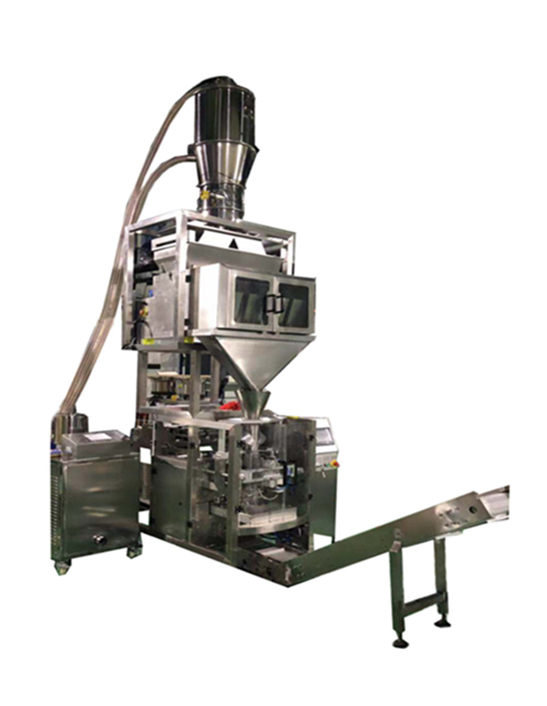
Vertical form-fill-seal remains the workhorse for dry pet food, and for good reason: it forms the bag, fills it and seals it in one continuous motion, with a footprint that fits most factories. For a 10 kg bag of kibble, a large vertical machine paired with a linear weigher gives a steady, repeatable weight without dropping the product from a great height. For 50 to 500 g treat bags, a high-speed granule machine is usually the better fit, particularly when the film needs a clean, tight seal at high cycle rates.
Two details decide whether the line feels calm or chaotic six months after installation. The first is dust: kibble leaves fine particles that drift into the sealing jaws, so a well-designed infeed and a small extraction point near the forming tube pay for themselves quickly. The second is film behaviour: PE and laminated structures handle differently, and the machine should be tuned with the film you intend to buy in volume, not a sample roll that happened to be in the room.
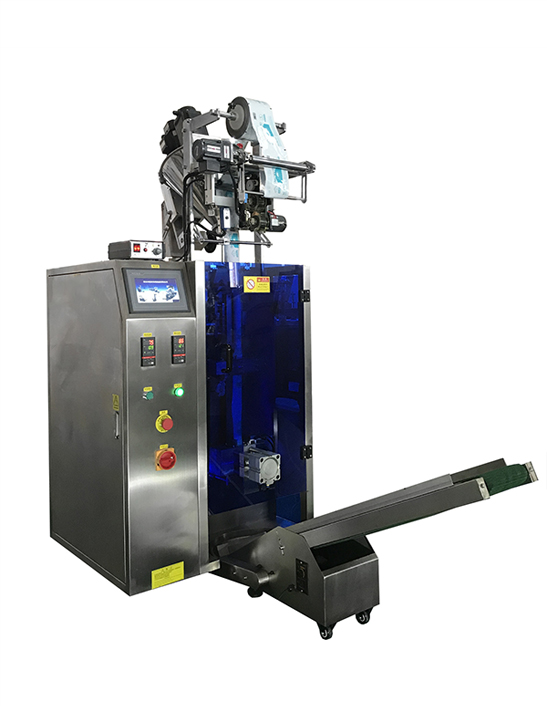
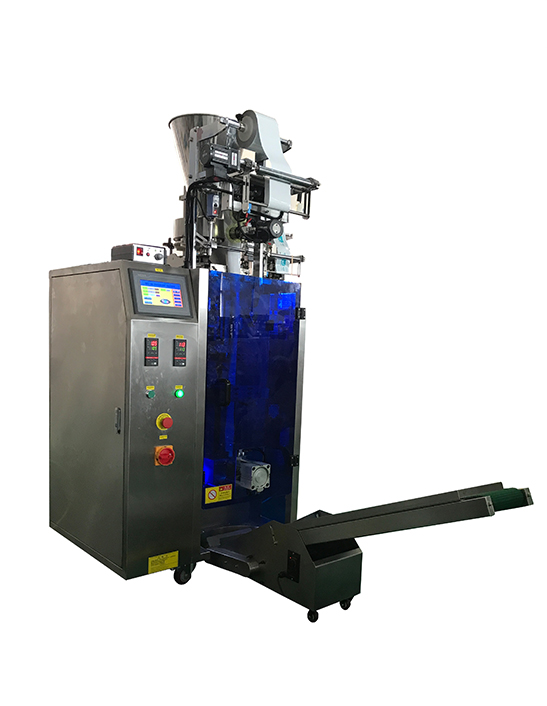
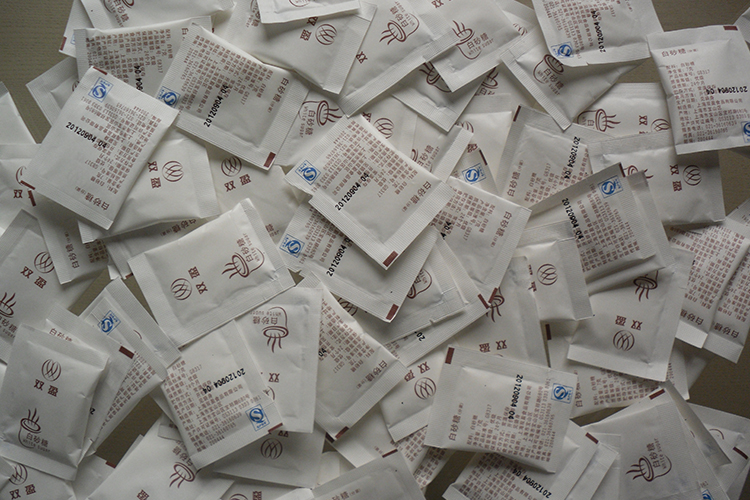 DXDK-80Z High-Speed Granule Packing MachineGranule packaging machine for dry-food lines, with step-motor metering and adjustable sealing; review it early when dust and film behaviour shape line design.View Product →
Nitrogen flushing is worth discussing early for dry food, because the gas inlet, the sealing profile and the bag headspace all have to be designed together for the result to hold.
Wet pet food is a different discipline. The product is viscous, often warm when filled, and contains fat and moisture that will find any gap in a seal. Piston and paste fillers with jacketed or heated hoppers keep the product moving, while the filling nozzle has to deliver a clean shot without smearing the sealing zone.
In our experience, the sealing stage deserves more attention than the filling stage in these projects. Warm product creates vapour, vapour creates pressure inside the pouch, and pressure finds weak seals. Cooling, controlled jaw dwell time and a clean film path solve most of it, and a simple leak check at start-up catches the rest before the pallet is full.
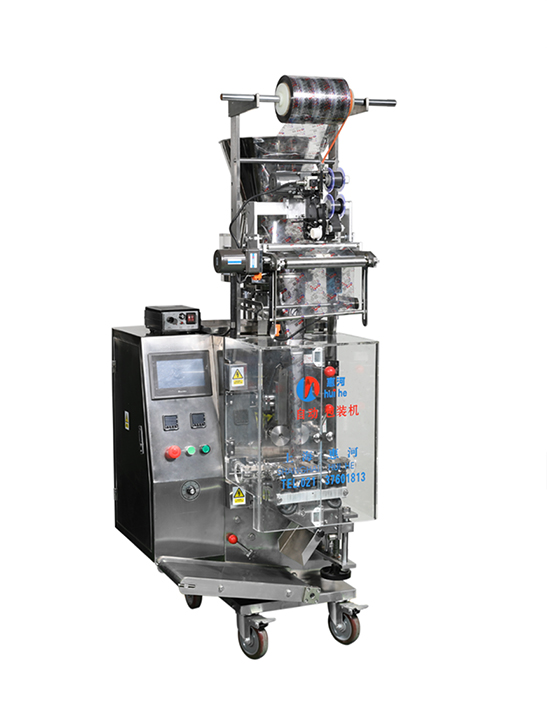
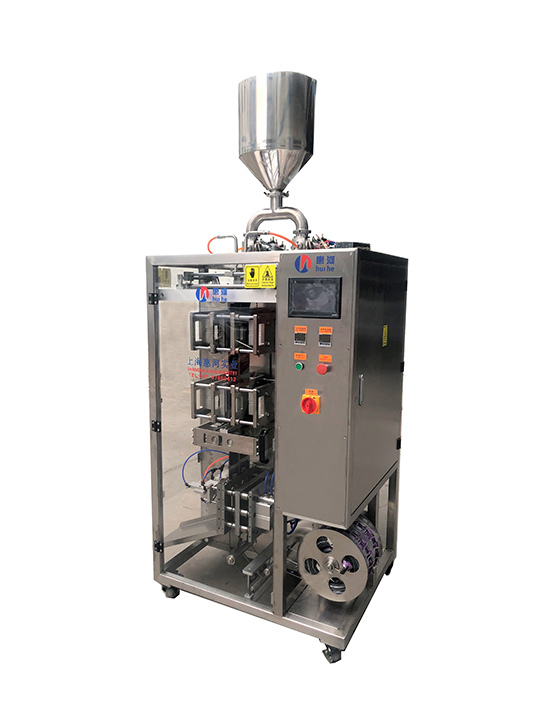
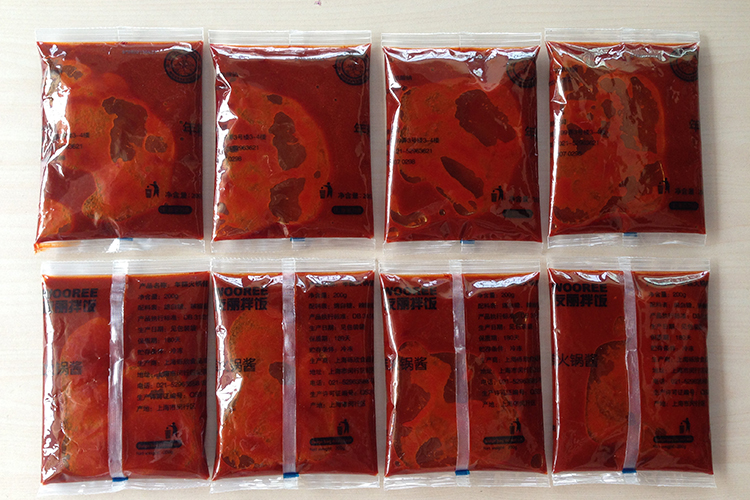 DXDL-300 Automatic Liquid Paste Packing MachineBack-side-seal liquid and paste packer with PID temperature control and piston-pump dosing; suited to sachet projects where seal cleanliness and fill cut-off matter.View Product →
For sachets and small wet-food pouches, the same principles apply at higher cadence, with extra care given to the fill cut-off and to keeping the seal bars clean between cycles.
Premium treats and wet food in pouches increasingly use premade bags: stand-up doypacks, zippered pouches, spouted packs or shaped bags that sit on the shelf with a little more presence than a pillow bag. A premade bag machine opens the pouch, fills it, and seals the top, which keeps the printed film and the shelf impression under your control.
The trade-off is straightforward. Premade bags cost more per unit than roll film, but they buy you better print quality, easier changeovers between pack designs, and a more predictable seal because the bag geometry is already set. For treat ranges with several flavours and pack sizes, that trade-off often makes sense.
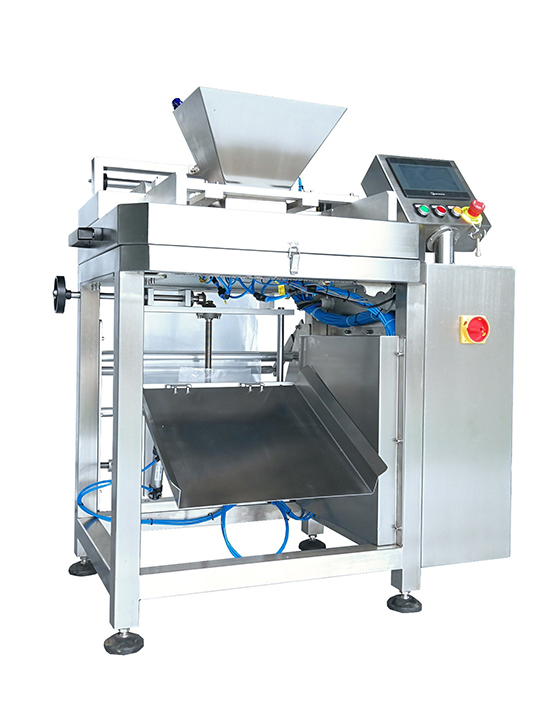
 Automatic Premade Bag Granule Packing MachinePremade-bag granule system with PLC and touch-screen control, configurable filling heads and bag styles; useful when pack design changeovers and seal predictability matter.View Product →
When the product is a paste or a gravy, the same platform exists with a liquid and paste filling head, so the pouch format does not force you to change the rest of the line.
Almost every pet food packaging problem we are asked about comes back to the seal: a bag that leaks air, a pouch that fails in transit, a zipper that does not close after the third use. The causes are rarely exotic. Product in the seal area, insufficient cooling before packing, worn jaws, or a film that was specified for appearance rather than for sealing behaviour.
Three habits keep this under control. Check the seal at the start of each shift and after every film roll change. Record jaw temperature and dwell time so that settings can be repeated rather than rediscovered. And keep the sealing zone clean, which usually means handling dust and product splash upstream instead of wiping jaws all day.
For food safety, stainless contact surfaces, washdown-friendly frames and easy access to the film path matter as much as output figures, especially where meat-based ingredients are involved.
Pet food ranges have a habit of multiplying. A single kibble recipe can appear in 400 g, 2 kg and 12 kg bags, then in a trial pack, then in a new flavour. Machines that look fast on paper can lose that advantage if every changeover needs tools and an hour of adjustment. Tool-less bag forming sets, saved recipes on the touch screen and quick film splicing are quietly valuable features.
The packaging machine is also rarely the end of the story. A typical pet food line runs through several stages:
Thinking about those later stages while the main machine is being specified avoids the familiar scene of a fast filler waiting for a slow carton sealer.
A supplier can only give useful advice when they understand the real product. In practice, that means arriving with a few kilos of the actual food, its bulk density, the target weight and acceptable tolerance, the bag dimensions and film structure you intend to use, the output you need per shift, and the constraints of the room: power, compressed air, ceiling height and floor space.
Ask for tests on your own samples rather than demonstration videos, and ask what spares and training come with the machine. A short commissioning visit and a clear spare-parts list are worth more than a longer list of features. If this is your first purchase in the category, our notes on how to buy a suitable packing machine for food products cover the same questions from a buyer's angle.
The range of packaging machinery we build spans granule, powder, liquid and paste filling, sealing, cartoning and end-of-line handling, which means most pet food projects can be matched to an existing platform rather than starting from a blank page.
Pet food packaging rarely fails for exotic reasons. It fails because a kibble dust problem was ignored, because a warm pouch was sealed too fast, or because nobody asked how often the bag size would change. Get the product description right, match the metering and sealing method to it, and the machine will do the quiet, unglamorous work it was bought for.
Copyright © Soontrue Huihe Automation Equipment (Shanghai) Co.,LtdAll Rights Reserved. Custom Packaging Machinery Manufacturers