英语
英语 西班牙语
西班牙语 简体中文
简体中文Industry News
Home / News / Industry News / Liquid Packaging Machine Guide: Types, Filling Methods and Selection Tips
Content
Anyone who has spent a full shift beside a filling line knows that liquids have a mind of their own. A sauce that looks thick in the tank runs like water at the nozzle. A juice with pulp blocks a valve before the first break. A foamy product leaves half a pouch filled with air.
We have been building liquid packaging machines since 2006, and after thousands of installations in food, pharmaceutical, agrochemical and daily chemical plants, the lessons stay simple: match the dosing method to the product, match the machine to the pack, and keep the line easy to clean. This guide covers what these machines do, the main types you will meet, how the different filling principles suit different liquids, and what is worth checking before you invest.
Strip away the guards and the touch screen and every liquid packaging machine is doing three jobs at once: holding the pack in the right shape, putting an exact amount of product inside it, and closing it so that nothing leaks. The conveyor, the date coder and the reject station all exist to support those three jobs.
How the machine holds the pack usually defines its family. A vertical form fill seal machine draws film from a roll, forms it around a tube into a bag, fills it, seals it and cuts it free in one continuous motion. A premade pouch machine picks up a pouch that was printed and laminated elsewhere, opens the top, fills it and seals it shut. Bottle and cup lines take a rigid container from a magazine or a conveyor, fill it, and then apply a cap or a lid instead of a seal jaw.
The choice of machine is therefore a choice about packaging format first and product second. Once you know whether your market wants a sachet, a spout pouch, a bottle or a cup, the technical conversation becomes much shorter.
The market offers more variations than most buyers need to know about, so the table below groups them by the pack they produce. Output figures are indicative; the real number always depends on product, dose size and film.
| Machine type | Typical pack | Liquids it suits | Indicative output |
|---|---|---|---|
| Vertical form fill seal | Sachet or pillow bag from roll film | Sauces, oils, juices, detergents | 30-80 bags/min |
| Premade pouch machine | Stand-up, spout or zipper pouch | Ketchup, honey, shampoo, drinks | 20-60 pouches/min |
| Sachet and stick pack machine | Narrow single-dose stick | Coffee concentrate, syrups, dressings | Up to 400 sticks/min |
| Filling and capping line | Bottles and jars | Water, edible oil, syrups, lotions | Set by number of heads |
| Cup sealing machine | Sealed cups and tubs | Yoghurt, jelly, milk tea, dessert | 2,000-6,000 cups/hour |
Most liquid projects land in one of these five groups. The next three subsections cover the ones customers ask us about most often.
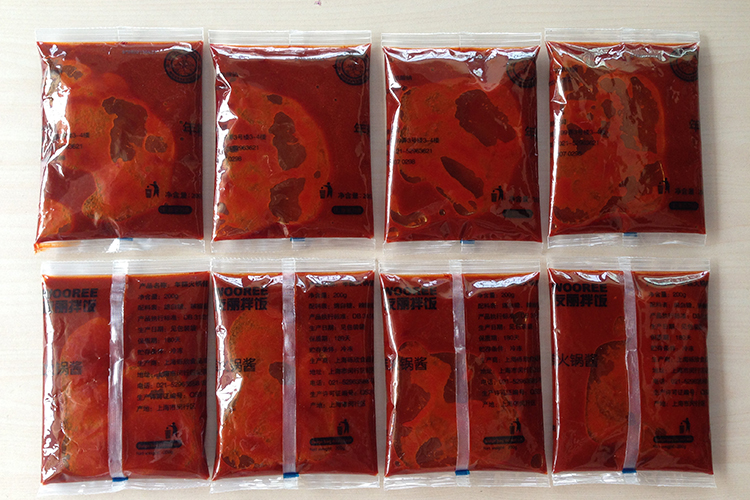
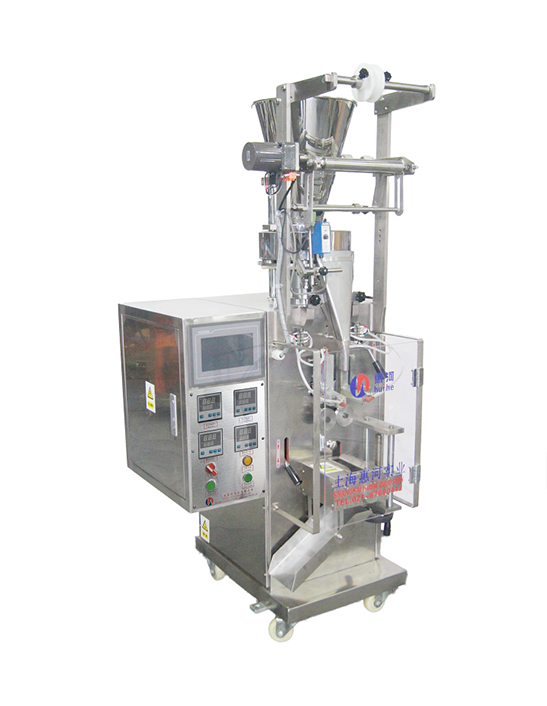
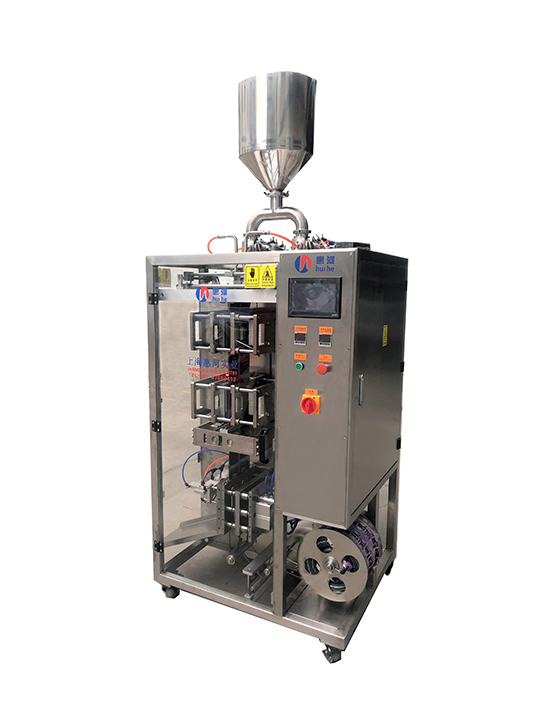
VFFS machines are the workhorses of liquid packaging: compact, inexpensive to run, and fast enough to turn out a sealed sachet in well under a second. The trade-off is that the bag shape is limited to what a forming tube can create, and film tension has to be managed carefully once the product is heavy. For back-seal liquid pouches in the 5-100 ml range, a servo-driven machine with piston or pump dosing is a sensible starting point.
 DXDL-300 Automatic Liquid Paste Back-Seal Packing MachineFor back-seal liquid pouches in the 5–100 ml range, this machine forms, fills, seals, cuts, and counts sachets automatically.View Product →
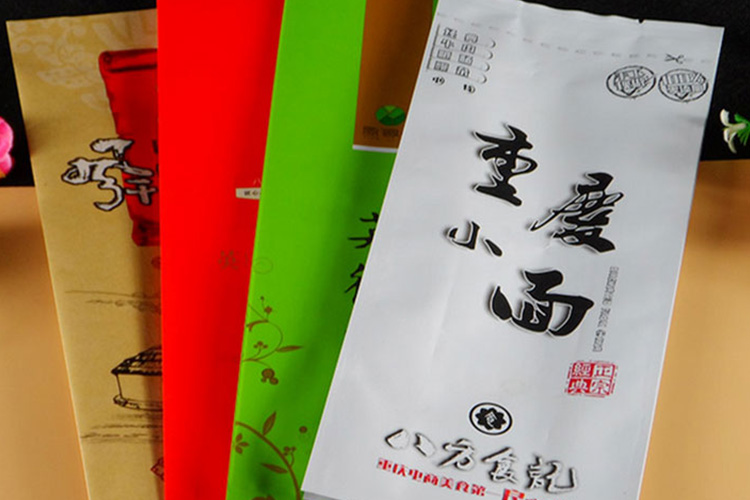
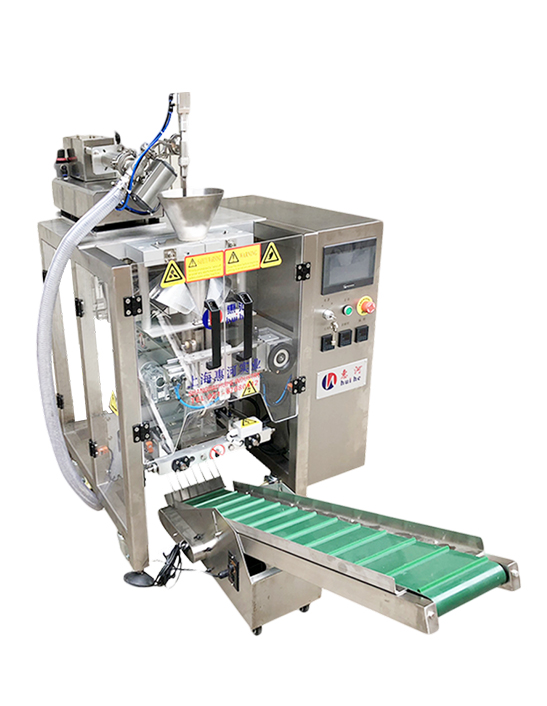
When the pack has to look good on a shelf, premade pouches win. Stand-up, spout and zipper bags arrive already printed, so print registration is no longer your problem and film waste drops sharply. Spout pouches are especially popular for juices and concentrates, because the consumer can pour without reaching for scissors; our notes on how to fill a liquid spout bag cover the practical details.
 Automatic Premade Pouch Liquid Paste Packing Machine HP SeriesFor shelf-ready premade pouches, this automatic PLC-controlled machine fills and seals liquids, pastes, powders, granules, and solids.View Product →
Not every project needs a fully automatic line. Small producers, sample rooms and factories running several products in short batches often do better with a semi-automatic filler and a separate sealer. A pneumatic liquid and paste filler lets an operator place pouches or containers by hand while the machine handles the dosing, which keeps the investment low and the changeover quick.
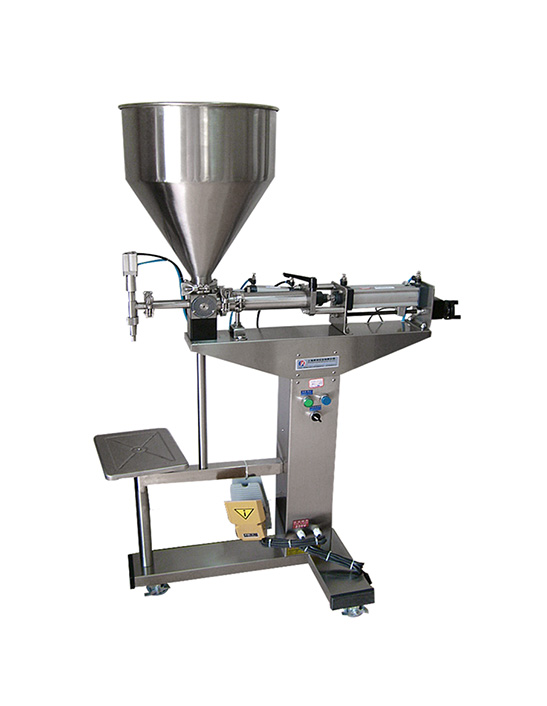 GCG-BL Pneumatic Liquid Paste Filling MachineAvailable in four models covering 20–1000 ml, this pneumatic filler suits small-batch liquids and pastes with easy cleaning.View Product →
The filling head is where most projects succeed or fail, and the right choice depends far more on the product than on the machine frame. These are the principles you will meet, roughly in order of increasing complexity.
Three product characteristics drive the decision: viscosity, whether the liquid carries particles, and how much it foams. Thick ketchup and thin juice will never share a filling head comfortably. If you are still weighing manual against automatic filling, our comparison of manual filling versus a bag filling machine shows where the break-even point usually falls.
Once the pack and the filling principle are settled, the remaining questions are practical ones. We usually walk customers through this list in a single meeting.
It is worth asking for a test run with your own product before signing anything. A machine that fills water perfectly may behave quite differently with a dressing that separates overnight in the tank.
A liquid packaging machine is a long-term investment, and much of its cost of ownership appears after commissioning. Daily rinsing of the product path, a weekly check of seal jaw pressure and film tension, and periodic calibration of the dosing system prevent the majority of the faults we are asked about. Operators who understand why a pouch is underfilled usually solve the problem faster than a service visit would.
Because packaging machinery is a capital purchase, several people inside your company will have an opinion. Production managers care about uptime and changeover, quality teams care about seal integrity and dose accuracy, and finance cares about film waste and power consumption. A supplier who can answer all three groups in one visit saves a great deal of internal debate. Our factories in Shanghai, Guangdong and Hebei, together with offices in the United States, Thailand, Bangladesh, India and Japan, exist for that reason: a machine is only as useful as the support behind it.
If you are starting a liquid packaging project, begin with the pack. Decide whether your product belongs in a sachet, a spout pouch, a bottle or a cup, then work backwards to the filling method and the machine. Send us a sample of your product and a photo of the pack you have in mind, and we will tell you honestly which machine fits and which one does not. That conversation has been our most reliable sales tool for twenty years.
Copyright © Soontrue Huihe Automation Equipment (Shanghai) Co.,LtdAll Rights Reserved. Custom Packaging Machinery Manufacturers