Content
When it comes to granule packaging operations, the choice between high-speed and standard packaging machines represents one of the most critical decisions manufacturers face. This choice impacts not only immediate production capacity but also long-term profitability, operational flexibility, and competitive positioning in the market. High-speed granule packing machines are engineered to handle significantly higher throughput, typically operating at speeds of 60 to 200 bags per minute or more, depending on product characteristics and bag sizes. In contrast, standard packaging machines generally operate at 30 to 60 bags per minute, offering reliable performance for operations with moderate production demands.
The distinction between these two categories extends far beyond simple speed metrics. High-speed machines incorporate advanced automation technologies, precision control systems, and robust construction designed to maintain accuracy and reliability under sustained high-volume operation. Standard machines, while less technologically complex, offer proven reliability, easier maintenance, and lower capital investment requirements. Understanding these fundamental differences is essential for making informed equipment decisions that align with your specific production requirements, budget constraints, and growth projections.
The most obvious distinction between high-speed and standard granule packing machines lies in their production capacity. High-speed machines are designed for manufacturers operating continuous production lines or those serving high-volume markets where maximizing output per shift is paramount. These machines can package thousands of units per hour, making them ideal for products with strong market demand such as snack foods, pet foods, fertilizers, pharmaceutical granules, and agricultural seeds.
Standard packaging machines serve operations where production volumes are moderate or where product changeovers are frequent. They excel in environments producing multiple SKUs with varying bag sizes, where the flexibility to adjust quickly between products outweighs the need for maximum speed. For businesses packaging specialty products, seasonal items, or serving niche markets, standard machines often provide the optimal balance of capability and cost-effectiveness.
| Feature | High-Speed Machines | Standard Machines |
| Packing Speed | 60-200+ bags/minute | 30-60 bags/minute |
| Daily Output (8 hours) | 28,800-96,000+ bags | 14,400-28,800 bags |
| Changeover Time | 30-60 minutes | 15-30 minutes |
| Ideal Batch Size | 10,000+ units | 1,000-10,000 units |
| Operators Required | 1-2 (highly automated) | 1-3 (moderate automation) |
Beyond initial purchase price, ongoing operational costs differ substantially between machine categories. High-speed machines consume more electricity due to their powerful motors, advanced servo systems, and continuous operation at elevated speeds. However, they dramatically reduce labor costs per unit produced through automation and efficiency. Energy consumption for high-speed machines typically ranges from 5 to 15 kW per hour, while standard machines consume 2 to 6 kW per hour. When operating multiple shifts, these energy differences accumulate into significant annual expenses that must be factored into total cost of ownership calculations.
Maintenance costs also vary considerably. High-speed machines require more frequent servicing, specialized technician expertise, and potentially more expensive replacement parts due to their sophisticated components. Annual maintenance budgets for high-speed equipment often reach 5-8% of the machine's purchase price, compared to 3-5% for standard machines. However, modern high-speed machines often include predictive maintenance capabilities and remote diagnostics that can reduce unexpected downtime and extend component life when properly utilized.
High-speed granule packing machines incorporate advanced weighing and control technologies to maintain exceptional accuracy even at elevated operating speeds. Multi-head combination weighers, commonly integrated with high-speed systems, achieve accuracy levels of ±0.5 to 1 gram for small packages and ±0.1% to 0.3% for larger bags. This precision minimizes product giveaway—the expensive practice of overfilling packages to ensure legal weight compliance—which directly impacts profitability when packaging millions of units annually.
Standard machines typically utilize single-head weighing systems or volumetric filling mechanisms that, while reliable, may not achieve the same precision levels as high-speed equipment. Accuracy ranges generally fall within ±1 to 3 grams for smaller packages or ±0.5% to 1% for larger formats. For many applications, particularly where target weights are generous or regulatory tolerances are less stringent, this accuracy proves entirely adequate and doesn't justify the additional investment in high-precision systems.
One area where standard packaging machines often excel is operational flexibility. Their simpler mechanical design and less complex automation make product changeovers faster and more straightforward. Switching between different granule types, bag sizes, or packaging materials on a standard machine might require only 15 to 30 minutes and can often be performed by production operators with basic training. This agility makes standard machines ideal for contract packagers, businesses with diverse product portfolios, or operations where production runs are relatively short.
High-speed machines, while increasingly incorporating quick-changeover features, typically require more time and technical expertise to reconfigure. Adjusting multi-head weighers, resetting servo-driven parameters, and calibrating high-precision sensors can extend changeover times to 30 to 60 minutes or longer. However, manufacturers of premium high-speed equipment have made significant strides in reducing changeover complexity through tool-free adjustment mechanisms, recipe management systems, and modular component designs that minimize reconfiguration requirements.
High-speed granule packing machines demand considerably more floor space than their standard counterparts. A complete high-speed packaging line, including product infeed conveyors, multi-head weighers, bag-making equipment, and outfeed systems, can occupy 200 to 400 square feet or more. Additionally, these systems require substantial overhead clearance for bag film rolls, pneumatic systems, and maintenance access. Facilities must also accommodate supporting infrastructure such as compressed air systems, electrical distribution capable of handling high power demands, and potentially climate-controlled environments to ensure consistent film performance and weighing accuracy.
Standard packaging machines offer a more compact footprint, typically requiring 50 to 150 square feet depending on configuration. Their reduced size makes them suitable for smaller facilities, allows easier integration into existing production layouts, and provides greater flexibility for future reconfiguration. The minimal infrastructure requirements—often just standard electrical service and basic compressed air—lower installation costs and simplify facility planning.
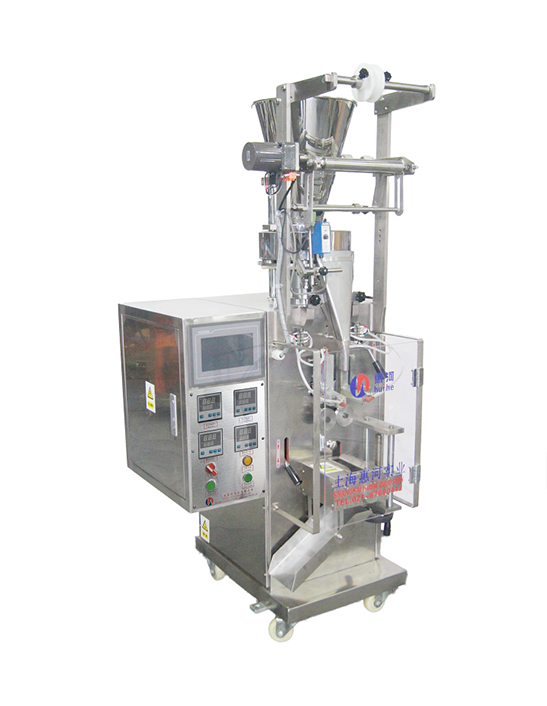
Modern high-speed granule packing machines represent sophisticated automated systems incorporating industrial IoT connectivity, programmable logic controllers (PLCs), human-machine interfaces (HMIs), and increasingly, artificial intelligence for predictive optimization. These machines seamlessly integrate with enterprise resource planning (ERP) systems, warehouse management systems (WMS), and manufacturing execution systems (MES), providing real-time production data, automated reporting, and comprehensive traceability capabilities essential for regulated industries.
The advanced technology embedded in high-speed systems enables remote monitoring and diagnostics, allowing equipment manufacturers or internal technical teams to troubleshoot issues, optimize performance, and schedule predictive maintenance without physical presence on the production floor. This capability minimizes unplanned downtime and maximizes overall equipment effectiveness (OEE), which is critical when operating expensive, high-capacity systems where every minute of production stoppage represents significant lost revenue.
Standard packaging machines typically feature more basic control systems, often with simpler operator interfaces and limited connectivity options. While newer standard models increasingly offer some automation features and basic data collection capabilities, they generally lack the sophisticated integration and analytical capabilities of high-speed equipment. For many operations, this technological simplicity is actually advantageous, reducing the learning curve for operators, simplifying troubleshooting, and eliminating dependency on specialized IT infrastructure or technical support.
The automation inherent in high-speed packaging systems dramatically reduces the number of operators required per package produced. A single high-speed line might require only one or two operators to monitor performance, handle film changes, and perform basic interventions, while producing output equivalent to three or four standard machines. However, these operators require higher skill levels, technical training, and often command higher wages due to their specialized expertise in managing complex automated systems.
Standard machines typically require one to three operators depending on the level of automation and ancillary equipment integration. While individual operator productivity is lower compared to high-speed systems, the labor pool for standard machine operation is broader and training requirements are less demanding. This accessibility to qualified personnel can be significant in regions experiencing skilled labor shortages or for businesses preferring to cross-train existing staff rather than hiring specialized technicians.
Selecting between high-speed and standard granule packing machines requires comprehensive analysis of multiple factors specific to your operation. Production volume stands as the primary consideration—if you're consistently packaging tens of thousands of units daily with long production runs of the same product, high-speed equipment delivers compelling economic benefits through efficiency, reduced labor costs, and minimized per-unit packaging expenses. Calculate your break-even point by comparing the additional capital investment against labor savings, increased throughput, and reduced giveaway costs.
Consider your product portfolio diversity and market dynamics. Operations serving multiple market segments with frequent product changes, seasonal variations, or customized packaging requirements often find standard machines provide better overall value through flexibility and lower changeover losses. Conversely, manufacturers focusing on high-volume commodity products benefit from the relentless efficiency of high-speed systems optimized for continuous operation.
Evaluate your growth trajectory and strategic planning horizon. If market analysis suggests doubling or tripling production within three to five years, investing in high-speed capacity today may prove more economical than purchasing standard equipment that will quickly become a bottleneck requiring additional capital investment later. However, if growth projections are uncertain or markets are volatile, the lower initial investment and greater flexibility of standard machines reduce financial risk while maintaining scalability through multiple-machine deployment.
Many successful packaging operations implement hybrid strategies that leverage the strengths of both equipment categories. A common approach involves deploying one or more high-speed lines for core, high-volume products while maintaining standard machines for secondary products, new product introductions, or serving as backup capacity during maintenance periods. This strategy optimizes capital efficiency while maintaining operational flexibility and reducing vulnerability to single-point-of-failure scenarios.
Another viable approach for growing businesses involves starting with standard equipment to establish market presence and refine packaging processes, then graduating to high-speed systems once volumes justify the investment and operational capabilities have matured. This staged investment strategy aligns capital deployment with revenue generation, reduces financial risk, and ensures the organization develops the technical expertise and process discipline necessary to maximize high-speed equipment performance.
The granule packaging equipment landscape continues evolving, with manufacturers increasingly offering modular systems that allow gradual automation upgrades. These solutions enable businesses to begin with basic configurations and systematically add capabilities such as automated bag feeding, advanced weighing systems, or integrated quality control as production volumes and budgets expand. This scalable approach provides a practical middle path between standard and high-speed extremes, allowing operations to optimize their packaging systems in alignment with business growth and market demands.


Copyright © Soontrue Huihe Automation Equipment (Shanghai) Co.,LtdAll Rights Reserved. Custom Packaging Machinery Manufacturers


 英语
英语 西班牙语
西班牙语 简体中文
简体中文