Content
Screw packing machines are a cornerstone of automated hardware and fastener packaging, enabling manufacturers, distributors, and contract packagers to count, weigh, and pack screws, bolts, nuts, and similar small metal components with speed and accuracy that manual handling cannot match. Whether you are running a high-volume fastener factory, managing a hardware distribution center, or setting up a small-batch packaging line for specialty fixings, understanding how screw packing machines work, what types are available, and what specifications determine their suitability for your application will help you make a better investment decision and avoid the costly mismatch between machine capability and production demand. This guide covers the subject in practical depth.
At its core, a screw packing machine automates the process of measuring a defined quantity of screws — either by count, weight, or both — and delivering that quantity into a bag, box, blister pack, or other retail or industrial packaging format. This sounds straightforward, but the challenge lies in the physical characteristics of screws and fasteners: they are heavy relative to their volume, they interlock and tangle, they have sharp points and threads that catch on conveying surfaces, and they come in an enormous range of sizes and geometries that all behave differently in a feeding and counting system.
Manual counting of screws into bags is slow, subject to human error, ergonomically demanding, and expensive in labor costs at any meaningful production volume. A single operator manually counting and packing screws might produce 200–400 bags per hour under good conditions. A properly specified automatic screw packing machine can produce 800–3,000 bags per hour depending on screw size, target count, and bag format, with counting accuracy typically exceeding 99.9%. Over a production run of millions of bags annually — which is routine in any volume hardware manufacturing environment — the difference in throughput, labor cost, and counting accuracy compounds into a substantial business case for automation.
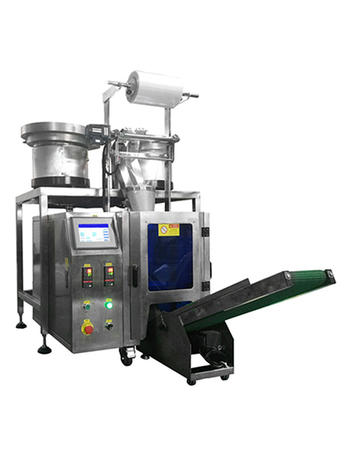
The method by which a screw packing machine measures the quantity of fasteners going into each pack is the most fundamental technical distinction between different machine types, and the choice between counting and weighing has significant implications for speed, accuracy, cost, and suitability for different product types.
Electronic counting packing machines use sensors — typically infrared optical sensors or vibration-based detection systems — to count individual screws as they pass through a detection zone. The screws are fed in a single-file stream past the sensor, each screw triggering a count pulse, until the target number is reached and the batch is released into the packaging below. Counting machines provide exact piece counts, which is important for retail packaging where pack quantity is printed on the label and must be accurate for regulatory and consumer trust reasons. They are most effective for screws of consistent size and geometry, where reliable singulation of the product can be achieved in the feeder system upstream of the sensor.
The limitation of counting machines is speed: the screws must pass the sensor one at a time (or in a defined small stream that the sensor can reliably resolve), which places an upper limit on the count rate. For small screws at high counts per bag, this can become a bottleneck. For large screws or bolts where packs contain relatively few pieces (for example, 10 or 20 large coach bolts per bag), counting machines deliver excellent throughput and precision.
Weighing-based packing machines use precision load cells to measure the weight of each batch of screws rather than counting individual pieces. The most sophisticated form is the multihead combination weigher, where multiple weigh hoppers simultaneously hold small portions of product and the machine's control system rapidly identifies the combination of hoppers whose combined weight is closest to the target weight. By combining different hopper loads rather than filling from a single stream, multihead weighers achieve target weight accuracy within ±1–2 grams even at very high speeds.
Weighing is significantly faster than counting for high-count, small-screw applications and is the preferred method for bulk hardware packs where an exact count is not required but pack weight must fall within a specified range. Weight-to-count conversion — where the machine calculates an approximate piece count from the known average weight per piece — allows weighing machines to display an estimated count even though the primary measurement is mass. The limitation is that weight accuracy depends on the consistency of the individual screw weight; significant variation in screw weight across a batch (due to manufacturing tolerances, mixed sizes, or contamination) reduces the reliability of weight-to-count conversion.
Beyond the counting versus weighing distinction, screw packing machines are available in several configuration types that differ in their level of integration, automation, and the packaging formats they support.
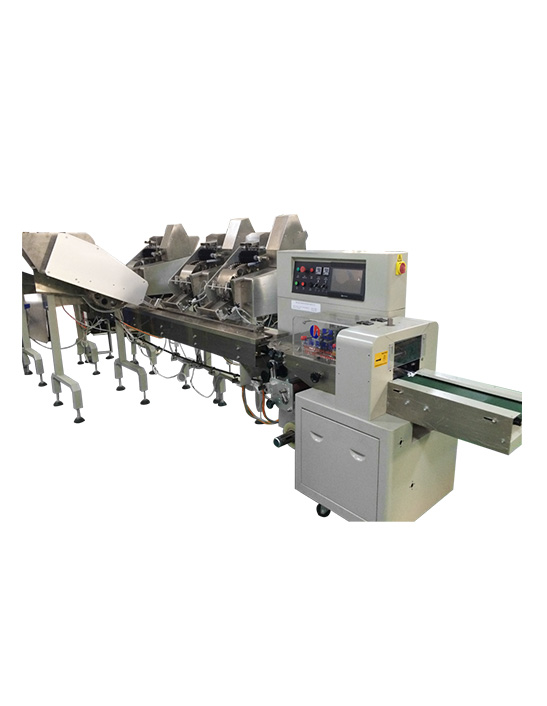
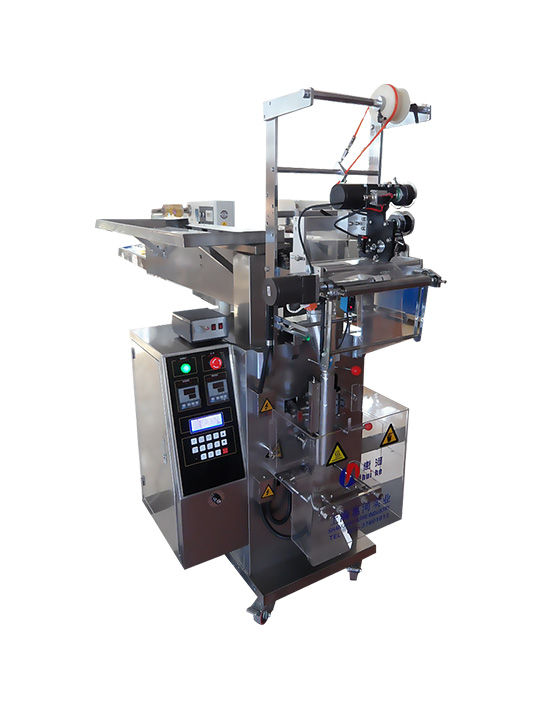
Semi-automatic machines automate the counting or weighing function but require an operator to present the bag or container, initiate the fill cycle, and remove the filled pack for sealing. These machines are appropriate for lower-volume applications, for packaging lines with frequent product changeovers, or for businesses that need the cost efficiency of automated counting without the capital investment of a fully integrated line. They typically include a vibratory bowl feeder that singulates and feeds screws to the counting sensor, a display for setting the target count, and a discharge chute that releases the batch when the count is reached. An experienced operator can run a semi-automatic counter at 400–800 bags per hour depending on the screw type and target count.
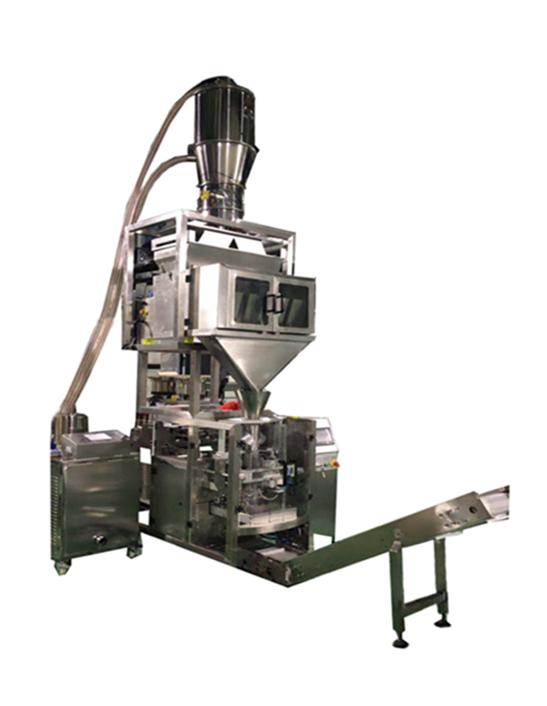
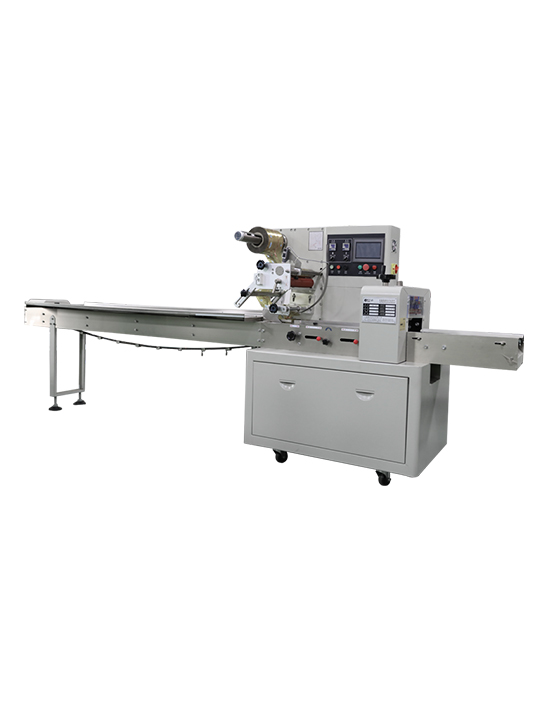
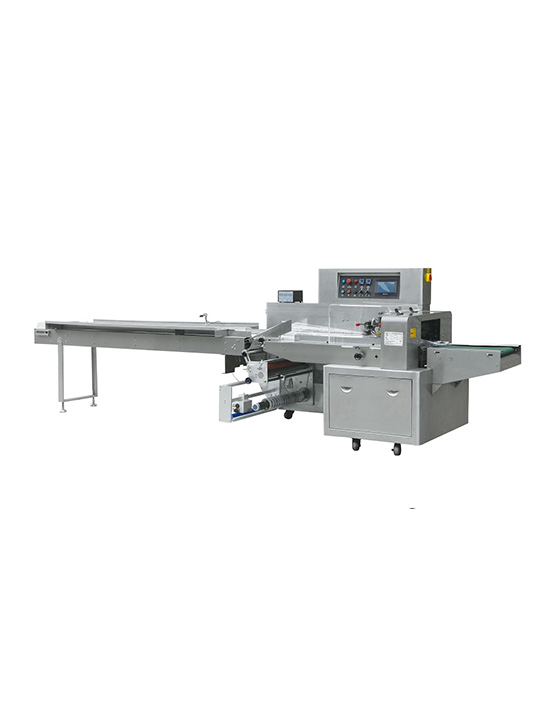
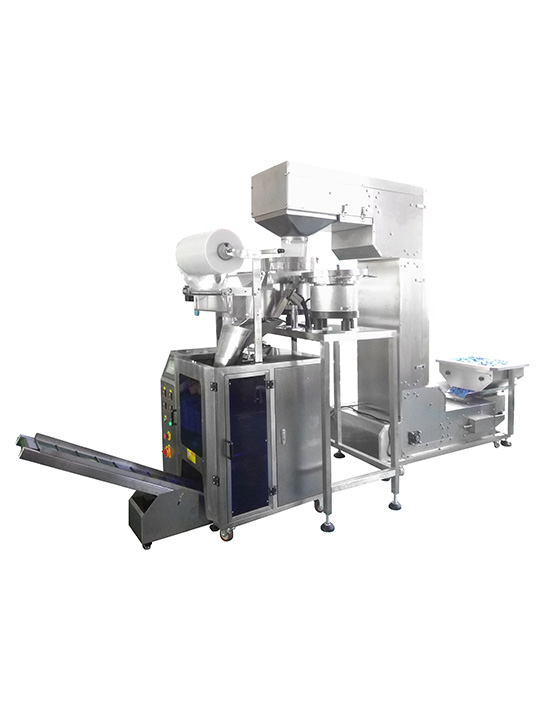
A fully automatic screw packing line integrates the counting or weighing unit with a vertical form-fill-seal (VFFS) or horizontal form-fill-seal (HFFS) packaging machine that forms the bag from a roll of film, receives the measured batch, seals the bag, and discharges the finished pack — all without operator intervention in the fill-seal cycle. These lines are the standard configuration for high-volume fastener packaging at 1,000 bags per hour and above. They require a larger footprint, higher capital investment, and more skilled maintenance than semi-automatic machines, but the labor cost savings and throughput at volume justify the investment for any operation running more than a single shift daily.
For high-speed bulk packaging of small fasteners — wood screws, self-tapping screws, machine screws in the M3–M8 range — multihead combination weighers mounted above a VFFS bagger are the preferred configuration. These systems use 10, 14, or 16 weigh heads arranged in a cone configuration, with product distributed from a central dispersion cone to the individual weigh hoppers. The combination calculation runs continuously, identifying the optimal hopper combination multiple times per second, and the system can achieve target weight accuracy of ±1% or better at speeds of 30–60 cycles per minute — equivalent to 1,800–3,600 bags per hour for single-bag drops.
| Specification | Typical Range | What to Look For |
| Counting / weighing speed | 400 – 3,600 bags/hr | Match to your shift output requirement with 20% headroom |
| Counting accuracy | ±0 to ±1 piece (electronic counters) | Zero count error for retail packs; verify with product trial |
| Weighing accuracy | ±1–3 g (multihead weigher) | Must meet declared net weight on pack labeling |
| Product size range | M2 – M20 (machine dependent) | Confirm feeder and sensor compatibility with your screw range |
| Bag format compatibility | Pillow bag, gusseted, flat bottom, header bag | Match to your retail display or bulk packaging requirement |
| Changeover time | 15 min – 2 hours | Critical for operations with many SKUs; tool-free changeover preferred |
| Control system | PLC with touchscreen HMI | Recipe storage, error logging, and remote diagnostic capability |
The feeder system — the mechanism that takes screws from a bulk hopper and presents them in a controlled, oriented stream to the counting sensor or weigh hopper — is the component most often responsible for performance problems in screw packing lines. A poorly designed or incorrectly configured feeder will cause screws to tangle, jam, bridge across the feed chute, or present to the sensor in overlapping clusters that cause miscounts. Investing in the right feeder design for your specific screw type is as important as selecting the right counting or weighing technology.
Vibratory bowl feeders are the most common feeder type for screw counting applications. A bowl feeder uses a vibrating helical track inside a circular bowl to convey screws upward and out through an exit track, during which tooling on the track orients the screws to a consistent orientation (typically point-forward or head-up). Bowl feeder tooling must be customized for each screw geometry — the track width, tooling blade positions, and vibration frequency all need to be matched to the specific screw being run. A bowl feeder tooled for M6 × 20 pan head screws will not reliably handle M8 × 40 hex head bolts without retooling.
For larger screws and bolts where vibratory bowl orientation is not practical, step feeders and belt feeders are used. A step feeder uses a series of reciprocating shelves to elevate screws from a bulk hopper to a delivery point, relying on gravity and the geometry of the steps to singulate the product without requiring precise orientation. Step feeders are robust, handle a wide range of screw sizes with minimal adjustment, and are less prone to jamming with long or heavy screws than bowl feeders. Their limitation is that they do not orient the product as consistently as a well-tooled bowl feeder, which can affect counting sensor reliability for some screw geometries.
In a modern hardware packaging operation, the screw packing machine rarely operates in isolation. It is typically integrated into a production line that includes upstream feeding and storage, the packing machine itself, and downstream labeling, printing, and secondary packaging equipment. Understanding how these elements connect helps buyers plan their full line investment rather than discovering integration gaps after individual machines have been purchased and delivered.
Inline labeling — where a label printer-applicator applies a printed label to each finished bag immediately after sealing — eliminates the separate labeling workstation and ensures that every bag carries accurate, real-time production data including batch number, date code, and barcode. Most VFFS bagger controllers can provide a trigger signal to the labeler synchronized with the bag discharge cycle. For retail packs that require a header card or hang hole, the VFFS bagger can be equipped with a hole punch unit that creates the hanging aperture during bag formation.
Secondary packaging — automatically collating finished bags into cartons or trays for distribution — can be integrated with robotic case packers or semi-automatic collation conveyors for high-volume lines. For lower volumes, a gravity or belt discharge conveyor that accumulates finished bags for manual case packing is a practical and cost-effective intermediate step that does not require the capital investment of a robotic secondary packing cell.
Screw packing machines operate in an environment that is hard on mechanical and electronic components — metal dust and swarf from screws accumulate on sensors and moving parts, sharp screw tips score conveyor belts and chute linings, and the continuous vibration of feeder systems accelerates fastener and bearing wear. Factoring maintenance requirements into the total cost of ownership calculation is essential for an accurate comparison between machine options at different price points.
Copyright © Soontrue Huihe Automation Equipment (Shanghai) Co.,LtdAll Rights Reserved. Custom Packaging Machinery Manufacturers


 英语
英语 西班牙语
西班牙语 简体中文
简体中文