英语
英语 西班牙语
西班牙语 简体中文
简体中文Industry News
Home / News / Industry News / What Is a Screw Packing Machine and How Do You Choose the Right One for Your Production Line?
Content
The screw packing machine is a specialized automated packaging solution designed to count, sort, and pack screws, bolts, nuts, washers, and other small fasteners into bags, boxes, or blister packs with speed and precision that manual packaging processes cannot approach at scale. In hardware manufacturing, construction supply, automotive components, electronics assembly, and consumer product distribution, screws and fasteners must be packaged in exact counts — five screws per bag, ten bolts per box, fifty assorted fixings per retail blister — and any counting error that reaches the end customer creates warranty issues, negative reviews, and brand damage that far outweigh the cost of the lost fasteners themselves. A well-specified screw packing machine eliminates counting errors, reduces labor costs, increases packaging throughput, and produces consistently presented packages that meet both retail and industrial customer expectations. Understanding the technology, the key performance parameters, and the selection criteria for these machines is essential for any manufacturer or distributor seeking to automate or upgrade their fastener packaging operations.
A screw packing machine integrates several functional subsystems that work in sequence to transform a bulk supply of loose fasteners into counted, sealed packages ready for distribution. The process begins at the feeding stage, where a large hopper or vibratory bowl feeder receives bulk fasteners and uses controlled vibration, centrifugal force, or conveyor movement to singulate and orient the screws into a single-file stream suitable for counting. Proper singulation is critical — screws that travel in clusters or that are not properly separated will produce counting errors or cause jams in downstream counting equipment.
From the feeder, the singulated screws pass through the counting system — the most technically demanding component of the machine — which detects and tallies individual fasteners using optical sensors, weight measurement, or a combination of both. Once the target count is reached, a gate or valve mechanism directs the counted batch into the packaging station, where it is deposited into the selected packaging format. The packaging station then seals the package — through heat sealing for polybags, folding and taping for cartons, or heat forming for blister packs — and ejects the completed package to a conveyor or collection area. The entire cycle then repeats automatically for the next package. Modern screw packing machines cycle through this complete sequence in two to fifteen seconds per package depending on count size, package format, and machine configuration, enabling throughput rates that manual packaging teams cannot sustain over a full production shift.
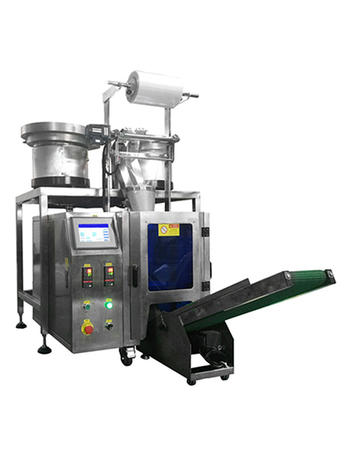
The counting mechanism is the performance-defining component of any screw packing machine, and the choice of counting technology significantly affects counting accuracy, the range of fastener types the machine can handle, and the maximum achievable throughput speed.
Optical counting uses one or more photoelectric sensor beams positioned across the screw flow path. As each screw passes through the sensor beam, it interrupts the light path and generates a count pulse registered by the machine's control system. Optical counting is fast, non-contact, and unaffected by the magnetic properties or conductivity of the fasteners being counted. It performs well with screws that are reliably singulated and have a consistent enough profile to generate clean, distinct sensor interruptions. The primary limitation of basic optical counting is sensitivity to fasteners that travel in pairs or partially overlapping positions — a situation that produces an under-count — and to very small fasteners whose diameter approaches the beam width, which can cause missed counts. Multi-beam optical systems and sophisticated signal processing algorithms address these limitations in higher-specification machines.
Weight-based counting relies on the consistent mass of individual fasteners to infer count from total batch weight. A precision load cell measures the accumulated weight of fasteners deposited into a weigh pan, and the control system divides the measured weight by the known individual fastener weight to calculate the count. This approach is independent of fastener orientation and feeding consistency, making it well-suited to fasteners with irregular shapes that are difficult to singulate reliably for optical counting. The accuracy of weight-based counting depends on the consistency of individual fastener weights — which varies with manufacturing tolerances — and the resolution of the load cell relative to the weight of a single fastener. For small screws weighing fractions of a gram, achieving single-piece counting accuracy requires high-resolution load cells and careful calibration. Many modern machines combine weight-based pre-counting with optical verification to achieve both speed and accuracy.
Some screw packing machines use a vibrating plate or segmented counting wheel with precisely dimensioned pockets or channels that physically capture and count individual fasteners one at a time. Each pocket holds exactly one screw of the specified size, and as the plate or wheel rotates, each captured screw falls through a counting gate into the package below. This mechanical counting approach is highly accurate for fasteners within a specific size range but requires mechanical changeover of the counting plate when switching between fastener sizes — a limitation that increases changeover time compared to sensor-based systems that require only a parameter change in the control software.
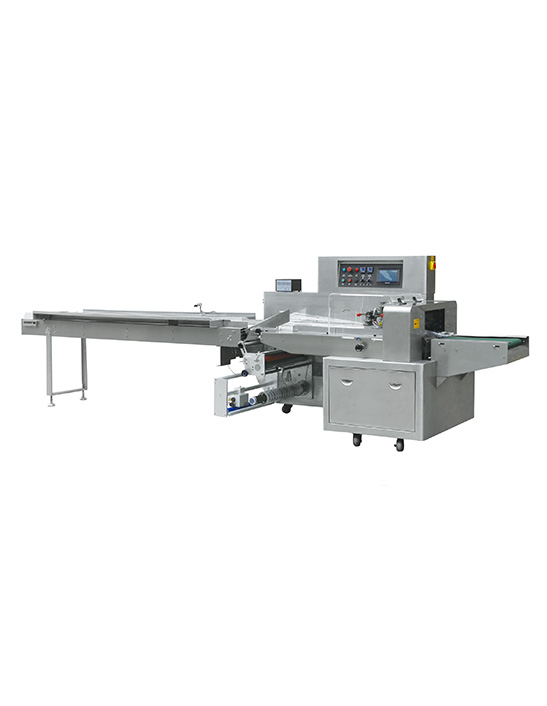
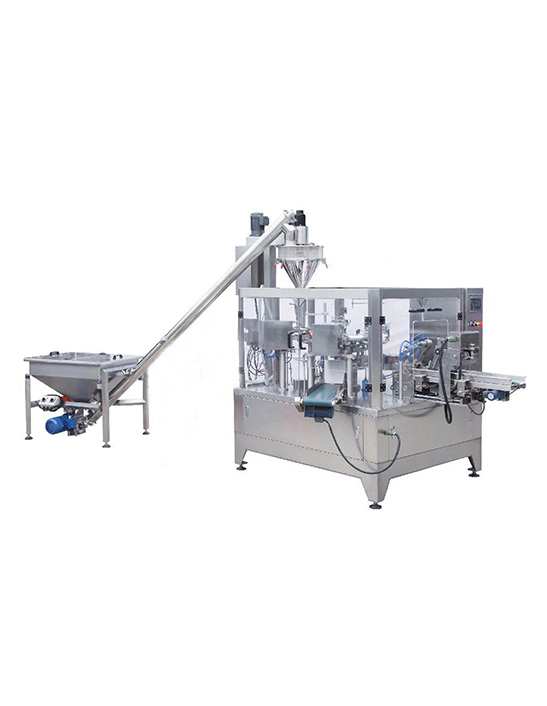
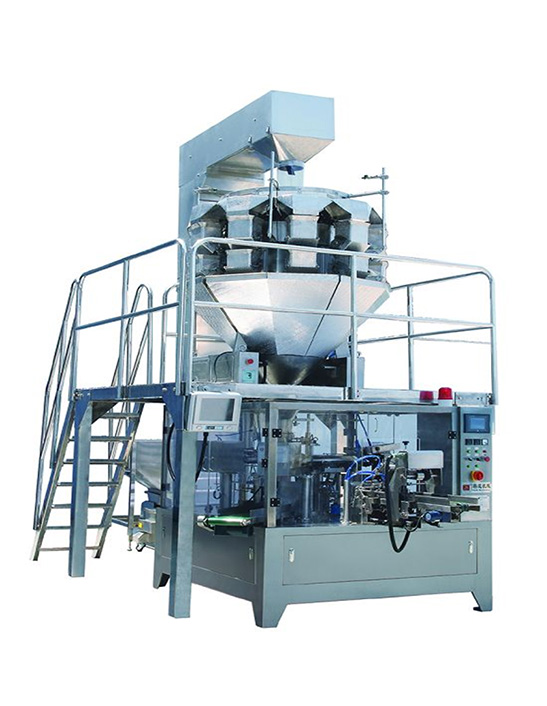
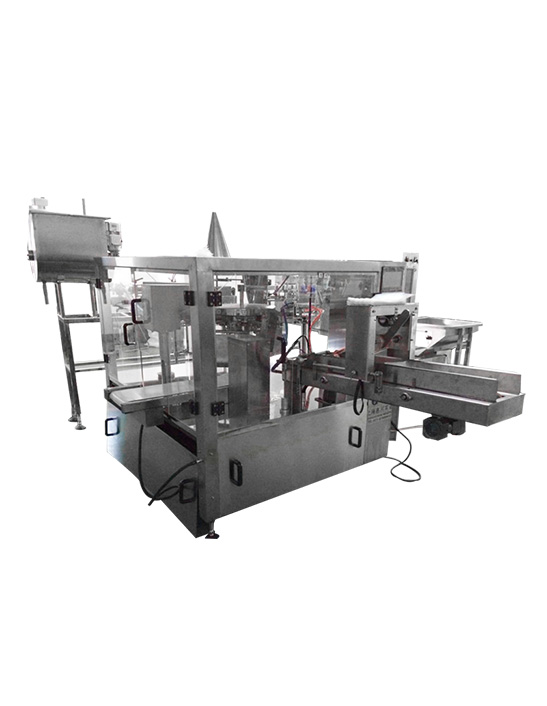
Screw packing machines are available in several configurations that differ in their degree of automation, packaging format compatibility, throughput capacity, and footprint. Selecting the correct machine type requires matching these characteristics to the specific production requirements and operational context of the facility.
| Machine Type | Automation Level | Typical Speed | Package Formats | Best Applications |
| Semi-Automatic Counter-Packer | Semi-automatic | 10–20 bags/min | Pre-made polybags | Small production, variety of SKUs |
| Automatic VFFS Packing Machine | Fully automatic | 20–60 bags/min | Form-fill-seal bags | High-volume, single SKU runs |
| Weighing + Bagging System | Fully automatic | 15–40 bags/min | Bags, pouches | Weight-based count, mixed fasteners |
| Blister Packing Machine | Fully automatic | 5–20 blisters/min | Thermoformed blister packs | Retail display, hardware stores |
| Multi-Head Combination System | Fully automatic | Up to 80 bags/min | Bags, boxes | High-volume, maximum accuracy |
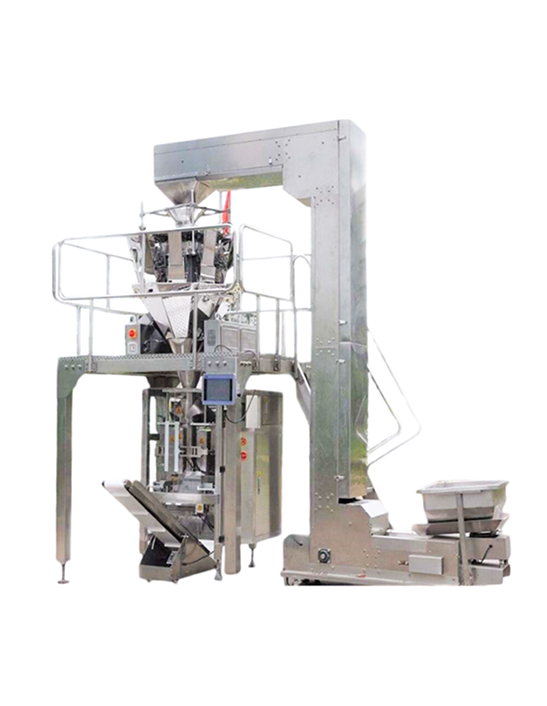
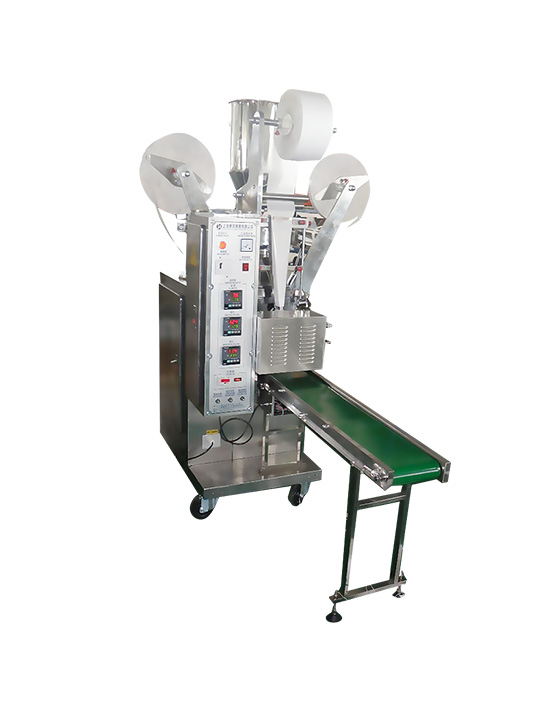
Vertical Form-Fill-Seal (VFFS) machines represent the most widely deployed fully automatic format for screw packaging in medium-to-high volume production environments. They form a bag from a roll of flat packaging film, fill it with the counted batch of fasteners, and seal the top — all in a continuous cycle that requires no manual handling between the bulk fastener supply and the sealed finished bag. Their high throughput, compact footprint relative to output, and compatibility with a wide range of bag sizes and film types make them the workhorse of automated fastener packaging lines globally.
When evaluating screw packing machines, several quantifiable performance parameters must be assessed against the specific requirements of the production environment to ensure the selected machine will meet both current needs and anticipated future demand.
The feeding system upstream of the counting mechanism has a profound effect on overall machine performance — even the most accurate counting system will produce errors and jams if the fasteners reaching it are not properly singulated and consistently oriented. Understanding the strengths and limitations of different feeding approaches helps in evaluating machine designs and in troubleshooting performance issues in existing installations.
Vibratory bowl feeders use controlled vibration to move fasteners along a spiral track inside a bowl, orienting them progressively as they travel toward the bowl exit. Correctly designed tooling in the bowl — shaped rails, pockets, and deflectors — selects for fasteners in the correct orientation and returns incorrectly oriented parts to the bowl for re-presentation. Vibratory bowl feeders are well-established, reliable, and capable of handling a wide variety of fastener types, but they require bowl tooling that is specific to each fastener type and size, meaning a separate bowl or retooled bowl is needed for each product in a multi-SKU operation.
Centrifugal disc feeders use a rotating disc to accelerate fasteners outward by centrifugal force and deliver them to a rail or channel system in a singulated stream. They typically operate at higher speeds than vibratory bowl feeders and are gentler on surface-finished fasteners because they involve less sliding contact between parts. Centrifugal feeders are increasingly popular in screw packing operations where high throughput and surface protection are both priorities, though they are similarly product-specific in their tooling requirements.
Flexible vibratory feeders — also called flexible feeding systems or robotic vision-guided feeders — use a vibrating flat or slightly concave feeding surface combined with machine vision and robotic pick-and-place to handle a wide variety of part types without product-specific tooling. The vision system identifies the position and orientation of each fastener on the vibrating surface and directs the robot or airjet to pick and transfer correctly oriented parts to the counting station. These systems offer exceptional flexibility for multi-SKU operations at the cost of higher capital investment and more complex software configuration compared to traditional bowl feeders.
Modern screw packing machines are equipped with PLC-based control systems and touchscreen HMI interfaces that provide operators with intuitive access to machine parameters, production data, and diagnostic information. The sophistication of the control system significantly affects the machine's ease of use, its ability to maintain consistent performance across operator skill levels, and its compatibility with plant-level production management systems.
Recipe management — the ability to store and recall complete machine parameter sets for each product SKU — is a standard feature on modern machines that dramatically reduces changeover time and human parameter-setting errors. A well-implemented recipe system stores all relevant settings including target count, package weight limits, feeder speed, sealing temperature and time, and label printing parameters for each product, allowing a complete changeover to be executed by recalling the stored recipe rather than manually re-entering dozens of individual parameters. For facilities with many SKUs, recipe management capacity — the number of recipes that can be stored — and the ease of creating and editing recipes are meaningful practical considerations during machine selection.
The selection of a screw packing machine involves balancing technical capability, production requirements, budget constraints, and operational practicalities. Working through a structured evaluation process ensures that the chosen machine delivers the required performance and value over its service life.
Preventive maintenance is the most cost-effective strategy for sustaining the accuracy, speed, and reliability of a screw packing machine over its operational life. The mechanical complexity of feeding, counting, and sealing systems means that wear and contamination accumulate progressively and affect performance in measurable ways before causing outright failure — making early detection and correction significantly less disruptive and costly than reactive maintenance after a breakdown.
Daily maintenance routines should include cleaning the vibratory feeder bowl and track to remove metal filings, oil residue, and fastener debris that accumulate during production and cause feeding irregularities or sensor contamination. Optical counting sensors should be inspected for dust or metal particle deposits on the sensor faces that reduce detection sensitivity and cause under-counting — compressed air cleaning and periodic sensor face wiping with a lint-free cloth are typically sufficient to maintain sensor performance between scheduled maintenance intervals. Heat sealing jaws should be inspected daily for seal quality on finished packages, and sealing temperature calibrated against the manufacturer's specification when seal quality degrades — worn PTFE sealing tapes and degraded silicone backing pads are the most common causes of poor seal quality and should be included in scheduled replacement parts planning. A comprehensive maintenance log recording all inspections, adjustments, and parts replacements for each machine provides the historical data needed to identify developing trends, predict component replacement requirements, and demonstrate due diligence in the event of a product quality complaint related to counting accuracy.
Copyright © Soontrue Huihe Automation Equipment (Shanghai) Co.,LtdAll Rights Reserved. Custom Packaging Machinery Manufacturers