英语
英语 西班牙语
西班牙语 简体中文
简体中文Industry News
Home / News / Industry News / What Is a Premade Bag Packing Machine and How Do You Choose the Right One for Your Production Line?
Content
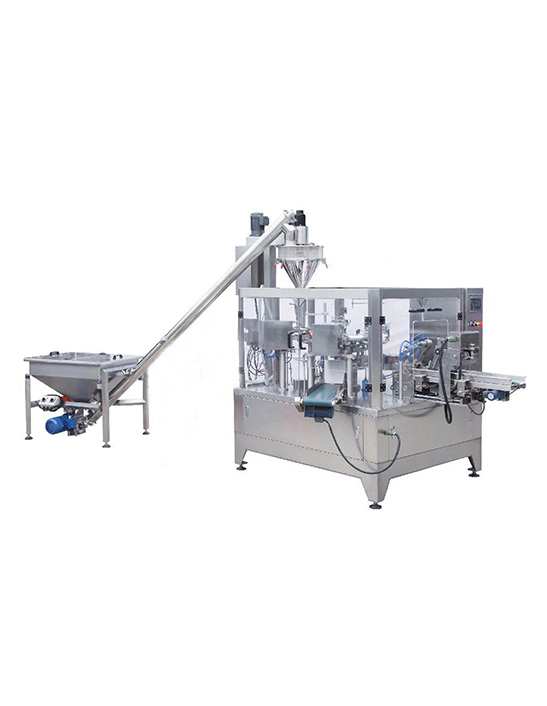
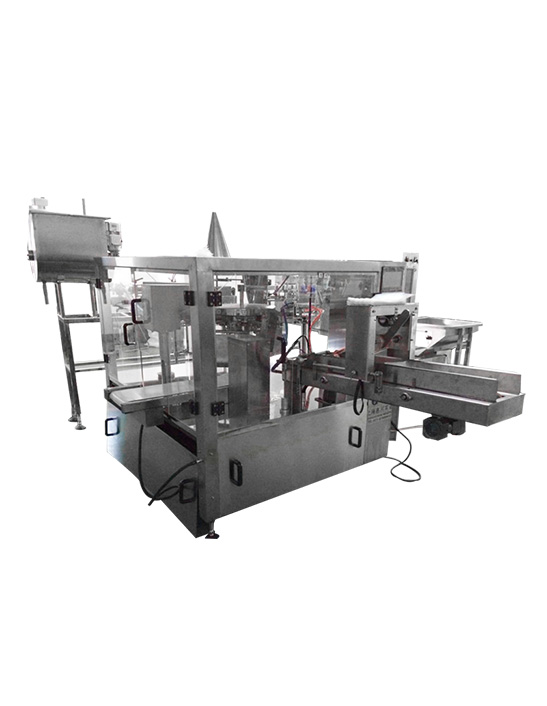
Premade bag packing machines represent one of the most significant upgrades available to food, chemical, pet food, and consumer goods manufacturers looking to automate their secondary packaging operations. Unlike form-fill-seal machines that create bags from roll stock during the packaging cycle, premade bag packing machines work with pre-manufactured pouches — stand-up pouches, flat bottom bags, zipper bags, spout pouches, and other formats — that are loaded into the machine's magazine and automatically opened, filled, and sealed at production speeds that manual or semi-automatic packaging operations cannot approach. The decision to invest in a premade bag packing machine, and the selection of the correct machine configuration for a specific product and pouch type, requires a clear understanding of how these machines work, what performance parameters govern their suitability for specific applications, and what operational and maintenance considerations affect the total cost of ownership over the machine's service life.
A premade bag packing machine operates through a sequential series of stations arranged around a rotary turntable or in a linear configuration, with each station performing a specific function in the packaging cycle. Pre-manufactured bags are loaded in bulk into a magazine or bag storage compartment at the beginning of the cycle. A bag-taking mechanism — typically a vacuum-cup gripper system — removes individual bags from the magazine one at a time and transfers them to the first processing station.
At the opening station, vacuum cups press against both faces of the bag near the top edge and are then moved apart laterally to open the bag's mouth to the width required for filling. For zipper bags, a separate zipper-opening mechanism engages the zipper closure before the bag is opened further. A spreading mechanism — typically a pair of expanding fingers or air jets — enters the opened bag mouth and spreads it to its maximum gape, ensuring the product can be introduced cleanly without bridging or spillage at the bag edges. The filled bag then moves to one or more sealing stations where heated sealing jaws close across the top of the bag, applying precise temperature, pressure, and dwell time to create a hermetic heat seal. A cooling station follows in many designs to solidify the seal before the finished package is released to the discharge conveyor.
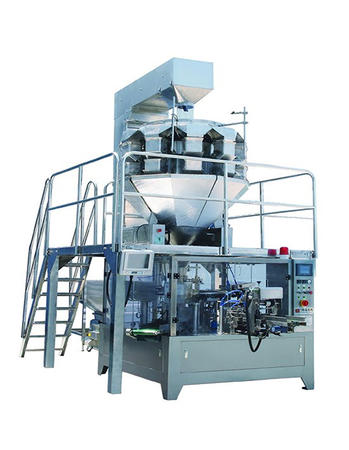
Additional stations in the cycle can include date coding (inkjet, laser, or hot-stamp printing on the bag surface before or after filling), nitrogen or gas flushing (for modified atmosphere packaging that extends product shelf life), zipper press stations (to ensure zipper closures are fully sealed after heat sealing), corner notching for easy-opening features, and vision inspection systems that verify seal integrity and print quality before discharge. The number of stations in a rotary premade bag machine — typically 6, 8, 10, or 12 stations — determines the maximum number of additional functions that can be incorporated while maintaining the machine's production speed.
One of the most important factors in premade bag packing machine selection is confirming that the machine's bag-handling system is designed and certified for the specific premade bag format required for the product and brand presentation. Different bag formats require fundamentally different opening, filling, and sealing approaches, and a machine optimized for one format may be entirely unsuitable for another without significant tooling changes or mechanical modifications.
When evaluating premade bag packing machines for a specific production requirement, the following technical parameters collectively determine whether the machine can meet the production rate, bag size range, fill accuracy, and hygienic design requirements of the application.
| Specification | Typical Range | What It Determines |
| Production Speed | 20 – 120 bags/min | Maximum throughput per shift |
| Bag Width Range | 100 – 450 mm | Range of bag sizes the machine handles |
| Bag Height Range | 100 – 400 mm | Minimum and maximum bag length handled |
| Fill Weight Range | 50 g – 5 kg (product-dependent) | Product volume and weight capacity per bag |
| Filling Accuracy | ±0.5% – ±2% (weigher-dependent) | Compliance with net weight regulations |
| Seal Temperature Range | 100°C – 260°C | Compatibility with bag film materials |
| Number of Stations | 6 – 12 stations | Number of additional process functions |
| Installed Power | 3 – 15 kW | Electrical infrastructure requirement |
Production speed requires careful interpretation. Manufacturers quote maximum speed under ideal conditions — typically with lightweight granular products, plain stand-up pouches, and a single fill head at the machine's optimal bag size. Real-world production speeds are typically 60 to 80% of the quoted maximum for most products after accounting for the time required for filling heavier or volumetrically challenging products, zipper handling, gas flushing cycles, and the brief pauses at each station for sealing jaw contact time. When calculating whether a specific machine meets a production target, use 70% of the quoted maximum speed as a realistic effective throughput estimate and confirm this with the machine supplier using your specific product, bag format, and fill weight.
The filling system integrated with the premade bag packing machine determines fill accuracy, product compatibility, and the machine's ability to handle products with challenging physical properties — high powder dustiness, fragile particulates, sticky or cohesive products, and liquids or semi-liquids all require specifically designed filling mechanisms.
The multihead weigher is the most common filling system paired with premade bag packing machines for granular, particulate, or mixed solid products including snacks, frozen foods, confectionery, pet food, and hardware items. The weigher uses multiple individually controlled weigh buckets — typically 10, 14, or 16 heads — that simultaneously measure the weight of product in each bucket and select the combination of buckets whose total weight most closely matches the target fill weight. This combinatorial weighing approach achieves fill accuracies of ±0.5 to ±1% at throughputs that single-head or volumetric filling systems cannot match. Multihead weighers are particularly valuable for products with significant piece-to-piece weight variation — a 14-head weigher running at the premade bag machine's production speed will select the optimal weight combination from thousands of possible bucket combinations per minute, keeping average overfill at the minimum level needed to comply with net weight regulations.
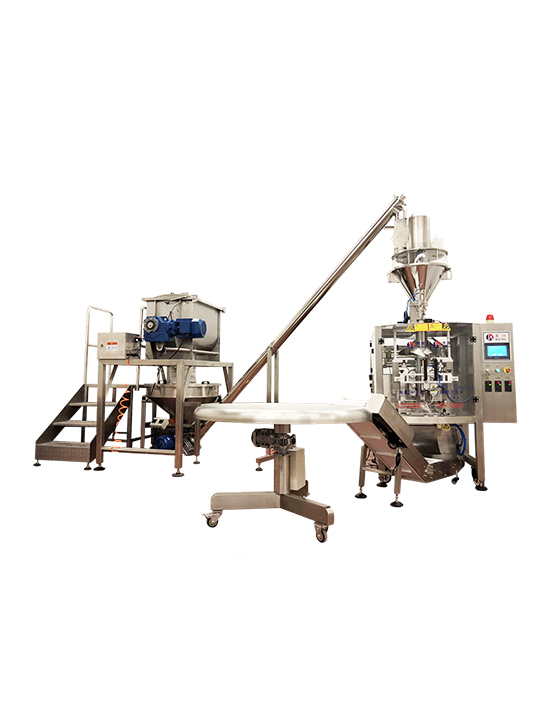
Auger fillers use a rotating screw (the auger) turning within a product cylinder to deliver a defined volume of powder or fine granular product into each bag per fill cycle. The fill weight is controlled by the number of auger rotations per cycle, which is calibrated against the bulk density of the specific product. Auger filling is appropriate for free-flowing and slightly cohesive powders including flour, spices, coffee, protein powder, detergents, and agricultural chemicals. Dust suppression — either through the filling funnel design, bag-clamping during filling to minimize spillage at the bag mouth, or a gentle airflow system that carries dust away from the seal area — is critical for powders to maintain seal integrity and prevent product contamination of the sealing jaw surfaces.
For liquid, sauce, paste, and slurry products filled into stand-up pouches or spout pouches, piston fillers or peristaltic pump fillers are integrated with the premade bag machine's filling station. Piston fillers draw a defined volume of product into a cylinder on the return stroke and dispense it into the bag on the fill stroke — suitable for free-flowing to moderately viscous liquids. For thick pastes, chunky sauces, or products with particulates suspended in liquid, pump-based systems with wide-bore product paths and CIP (clean-in-place) capability are required to maintain hygienic operation and facilitate changeover between different products without disassembly. Liquid filling into flexible bags requires careful fill nozzle positioning below the bag mouth to prevent splashing that would contaminate the seal area and cause seal failures — a fill nozzle that descends into the opened bag before dispensing and retracts to a safe height before sealing is a standard design feature for liquid-product premade bag machines.
For manufacturers packaging multiple products in different bag sizes, the time required to change the premade bag packing machine from one bag format to another — the changeover time — is a critical operational factor that directly affects the economic viability of running short production runs and the number of SKUs that can be practically managed on a single machine. Changeover on a premade bag machine typically involves adjusting the bag magazine width and depth, repositioning the bag-gripper systems to match the new bag width, adjusting the opening station finger spread and vacuum cup spacing, repositioning the fill nozzle height for the new bag depth, adjusting sealing jaw positioning, and recalibrating any date coding or print systems.
Modern premade bag packing machines address changeover time through several engineering approaches. Tool-free adjustment systems use hand wheels, indexed locking levers, and stored position memory rather than spanners and locked fasteners, allowing operators to reposition major adjustable components without tools. Servo-driven adjustable systems store position recipes in the PLC control system — selecting a stored product recipe automatically drives the servo axes to the correct positions for that bag format, reducing position-finding time to near zero for familiar bag formats. The best-in-class machines achieve changeover between bag sizes in under 20 minutes with trained operators; poorly designed machines with many tool-required adjustments can require 60 to 90 minutes per format change, which makes frequent SKU switching economically impractical.
For premade bag packing machines used in food, beverage, and pharmaceutical packaging, hygienic design of the machine's construction is a non-negotiable requirement that affects both regulatory compliance and the practical ease of cleaning between product runs. Key hygienic design principles that should be confirmed before purchase include stainless steel construction for all product-contact and splash-zone surfaces (typically 304 or 316 grade), smooth external surfaces without crevices, threads, or horizontal ledges that trap product residue, sloped or drainable horizontal surfaces in the working area, and IP65 or IP66 rated electrical components that allow wash-down cleaning without risk of electrical damage.
For allergen-sensitive food manufacturing or pharmaceutical packaging where cross-contamination between products must be prevented, CIP (clean-in-place) capability for the product contact path — including fill nozzles, product hoppers, and transfer pipes — eliminates the need for manual disassembly for cleaning, reducing both cleaning time and the risk of incomplete cleaning from missed product-contact surfaces. Confirm whether the machine manufacturer can provide third-party hygienic design certification (EHEDG, NSF, or 3-A) if required by the manufacturing facility's quality system or customer audit requirements.
The purchase price of a premade bag packing machine represents only a fraction of the total cost of ownership over a 10 to 15-year operational life. The following cost factors should be quantified alongside the capital cost when comparing machines from different suppliers at different price points.
A premade bag packing machine is a long-term production infrastructure investment whose returns are realized over years of consistent, high-speed operation. Approaching the specification, supplier evaluation, and commissioning process with the technical depth and operational discipline that the decision deserves consistently produces installations that deliver on their productivity, quality, and efficiency potential — while those rushed through procurement on price alone frequently generate the replacement and rework costs that erode the economics of the original decision within the first two years of production.

Copyright © Soontrue Huihe Automation Equipment (Shanghai) Co.,LtdAll Rights Reserved. Custom Packaging Machinery Manufacturers