英语
英语 西班牙语
西班牙语 简体中文
简体中文Industry News
Home / News / Industry News / What Makes Premade Bag Packing Machines Essential in Modern Packaging?
Content
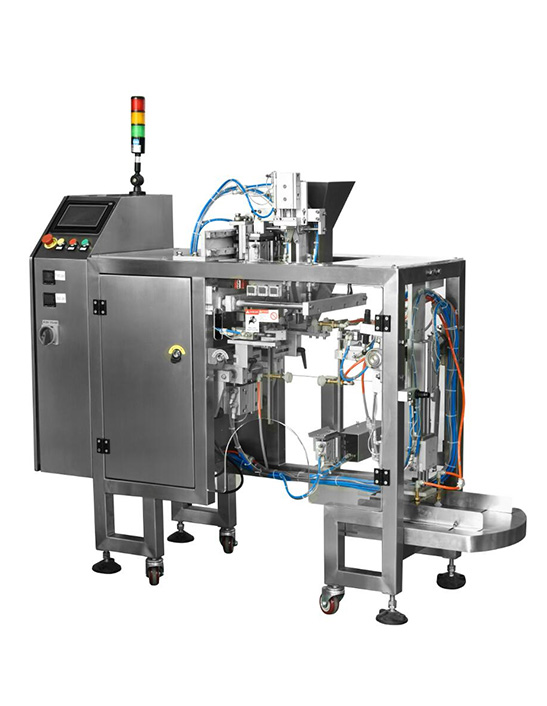
A premade bag packing machine is a highly efficient automated system designed to fill and seal pre-formed bags. Instead of creating bags from roll film, it uses ready-made pouches such as stand-up bags, flat bags, zipper bags, and gusseted bags. This machine is widely used in food, chemical, beverage, cosmetics, and pharmaceutical industries because it enhances accuracy, reduces labor costs, and significantly improves packaging consistency. As global manufacturing shifts toward automation, premade bag packing machines have become a core part of streamlined production operations.
The working process of a premade bag packing machine involves a combination of automated bag feeding, opening, filling, sealing, and output operations. Each step is controlled by sensors, servo motors, and PLC systems, allowing precise adjustment for different product types and bag materials. These machines can handle powders, liquids, granules, pastes, and irregular solid products, making them one of the most versatile packaging technologies available today.
Premade bag packing machines come in several configurations depending on production capacity, bag style, and automation level. Understanding the differences helps manufacturers choose the most suitable model for their products and workflow.
Rotary machines feature a circular working platform where multiple stations perform individual operations. They are known for speed, stability, and compact design, making them ideal for medium to large production environments. Their modular structure allows customization for bag sterilization, zipper opening, nitrogen flushing, and more.
Linear models operate along a straight-line path and typically support higher flexibility for larger bag sizes or heavier products. They are favored in bulk packaging applications and industries where bag changeover is frequent.
These systems combine bag loading, filling, sealing, coding, inspection, and secondary packaging within a single line. They are ideal for large factories seeking maximum automation with minimal labor involvement.
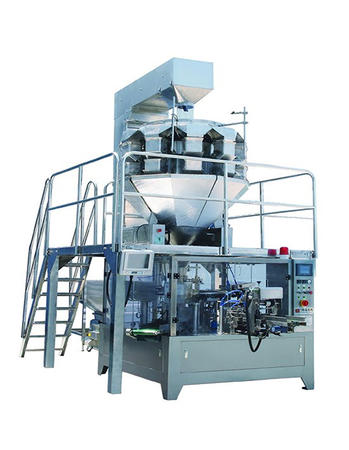
Compared with manual packaging or form-fill-seal systems, premade bag packing machines offer many operational advantages. They ensure consistent output, improve hygiene, and maintain quality across thousands of packages per hour.
Due to their adaptability and cleanliness, premade bag packing machines are used across a wide variety of sectors. They are particularly valuable where product quality, shelf appeal, and sealing integrity are critical.
| Industry | Common Products |
| Food | Snacks, coffee, frozen foods, nuts, spices |
| Beverage | Powder drinks, tea, ground coffee |
| Chemical | Fertilizers, detergents, industrial powders |
| Cosmetics | Creams, gels, face masks, lotions |
| Pharmaceutical | Granules, supplements, medical powders |
Selecting the correct machine requires evaluating production goals, product characteristics, and packaging materials. Manufacturers must consider long-term maintenance costs, space requirements, and compatibility with existing equipment. Below are the most important selection factors.
Although premade bag packing machines are efficient, operators may encounter certain challenges related to bag feeding, filling accuracy, sealing quality, or machine synchronization. Addressing these issues promptly ensures stable production and consistent output quality.
| Issue | Possible Cause | Solution |
| Bag Not Opening | Insufficient vacuum suction | Adjust suction cups or increase vacuum force |
| Inaccurate Filling | Improper calibration | Recalibrate the dosing system |
| Weak Seal | Low temperature or contamination | Increase sealing heat and clean sealing jaws |
| Bag Deformation | Overheating or improper grip | Adjust temperature and jaw pressure |
Premade bag packing machines represent a crucial step toward fully automated manufacturing. They reduce human handling, minimize contamination risks, and ensure consistent packaging quality. As global demand for flexible packaging grows, these machines deliver unmatched efficiency and adaptability, making them essential to future production lines.
For companies aiming to improve productivity, reduce labor needs, and deliver visually appealing packaged products, premade bag packing machines are an excellent investment. Their versatility, reliability, and ability to maintain high output make them suitable for both small manufacturers and large-scale factories. By choosing the right model and integrating proper maintenance, businesses can achieve long-term efficiency, quality consistency, and strong competitiveness in the packaging market.
Copyright © Soontrue Huihe Automation Equipment (Shanghai) Co.,LtdAll Rights Reserved. Custom Packaging Machinery Manufacturers