Content
A granule packing machine is a critical piece of equipment for manufacturers handling granular materials such as food ingredients, chemicals, pharmaceuticals, fertilizers, and plastic pellets. Choosing the right granule packing machine directly impacts packaging accuracy, production efficiency, product quality, and long-term operating costs. Rather than focusing on generic specifications, buyers should evaluate practical features that align with their material characteristics, production scale, and regulatory requirements. This article explores the key features to look for in a granule packing machine and explains why each one matters in real-world applications.
Granule packing machines are designed to measure, fill, and seal granular products into bags, pouches, or containers. These machines are widely used in industries where consistent weight, minimal product loss, and reliable sealing are essential. Granules can vary significantly in size, density, flowability, and abrasiveness, which makes machine selection more complex than it may initially appear.
A machine suitable for free-flowing sugar granules may not perform well with irregular or dusty materials such as detergents or fertilizers. Understanding the intended application is the foundation for identifying which technical features are truly necessary rather than optional.
One of the most important features of a granule packing machine is its weighing and dosing accuracy. Accurate filling ensures compliance with labeling regulations, reduces material waste, and maintains customer trust. Machines typically use volumetric cups, linear weighers, or multi-head weighers depending on precision requirements.
For high-value or regulated products, a high-precision weighing system is essential. Advanced control systems allow fine adjustment of filling parameters to accommodate variations in granule size or density, ensuring consistent results over long production runs.
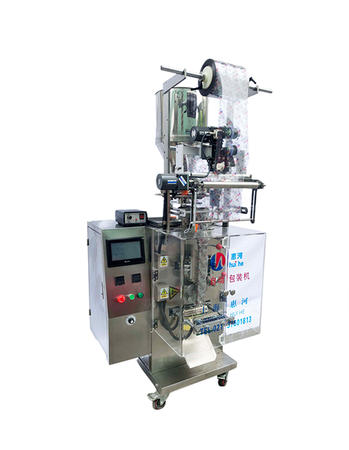
Granules behave differently during feeding and filling. A well-designed feeding system ensures smooth material flow without clogging, bridging, or segregation. Common feeding mechanisms include vibratory feeders, augers, and gravity-fed systems.
Free-flowing granules such as rice or plastic pellets require stable flow control to prevent overfilling. Poor-flowing or sticky granules may need agitation, vibration, or special hopper designs to maintain consistency. Choosing a machine compatible with your specific material characteristics prevents downtime and uneven packaging.
Production speed is a key factor when selecting a granule packing machine, especially for high-volume operations. Packaging speed is usually measured in bags or packs per minute and depends on the filling system, sealing method, and automation level.
A machine with adjustable speed settings offers greater flexibility, allowing manufacturers to balance output with accuracy. Investing in higher capacity than current needs can also support future expansion without replacing equipment.
Different products require different packaging formats, such as pillow bags, gusseted bags, stand-up pouches, or bulk sacks. A versatile granule packing machine should support multiple bag sizes and materials without extensive modification.
Quick changeover features reduce downtime when switching between products or packaging formats. This flexibility is especially valuable for manufacturers producing multiple SKUs on the same production line.
Sealing performance directly affects product protection, shelf life, and transport safety. Granule packing machines typically use heat sealing, impulse sealing, or continuous band sealing, depending on packaging material.
Consistent sealing pressure and temperature control are essential to prevent leaks or weak seals. Machines with adjustable sealing parameters allow operators to optimize seal strength for different films and bag thicknesses.
Modern granule packing machines increasingly rely on automated control systems to improve efficiency and reduce human error. Touchscreen interfaces and PLC controls enable precise monitoring and easy parameter adjustments.
Ease of cleaning is a crucial feature, especially for food, pharmaceutical, and chemical applications. Machines with smooth surfaces, minimal crevices, and tool-free disassembly simplify cleaning and reduce contamination risks.
Maintenance-friendly design also lowers long-term operating costs. Easy access to wear parts, standardized components, and clear maintenance documentation help minimize downtime and extend machine lifespan.
The durability of a granule packing machine depends heavily on its construction materials and overall build quality. Stainless steel frames are preferred for hygienic environments, while reinforced components are necessary for abrasive or heavy granules.
High-quality manufacturing reduces vibration, improves accuracy, and ensures stable operation over extended periods. A robust machine structure also enhances operator safety and reliability.
Safety features protect both operators and equipment. Emergency stop buttons, safety guards, and overload protection are essential for compliant operation. Machines used in regulated industries must meet relevant safety and hygiene standards.
Compliance with international standards simplifies inspections and supports market access. Selecting a machine designed with safety and compliance in mind reduces regulatory risk.
While initial purchase price is important, long-term value should be the primary consideration. Energy efficiency, spare part availability, and service support all influence total cost of ownership.
A granule packing machine that delivers consistent performance, minimal waste, and low maintenance costs often provides a better return on investment than a lower-priced alternative with limited features.
| Feature | Why It Matters |
| Weighing accuracy | Ensures compliance and reduces waste |
| Material compatibility | Prevents clogging and inconsistent filling |
| Automation level | Improves efficiency and repeatability |
| Ease of maintenance | Reduces downtime and operating costs |
Selecting a granule packing machine requires careful evaluation of features that directly impact performance, reliability, and cost efficiency. By focusing on weighing accuracy, material compatibility, automation, and build quality, manufacturers can choose equipment that supports consistent production and long-term growth. A well-chosen granule packing machine is not just a packaging tool, but a strategic asset that enhances overall manufacturing capability.
Copyright © Soontrue Huihe Automation Equipment (Shanghai) Co.,LtdAll Rights Reserved. Custom Packaging Machinery Manufacturers


 英语
英语 西班牙语
西班牙语 简体中文
简体中文