英语
英语 西班牙语
西班牙语 简体中文
简体中文Industry News
Home / News / Industry News / How to Choose the Right Tablet Packing Machine for Your Production Line?
Content
Choosing the right tablet packing machine starts with a clear understanding of your actual production and packaging needs. Tablet manufacturers operate under very different conditions depending on product type, target market, and regulatory environment. Before comparing machine models, it is critical to define what you expect the equipment to handle on a daily basis.
Key factors include tablet shape and size, fragility, coating type, and sensitivity to moisture or light. For example, effervescent tablets require moisture-proof packaging, while coated tablets may tolerate more handling. Defining these characteristics helps narrow down suitable packing technologies and avoid unnecessary investment in over-specified equipment.
Tablet packing machines come in several main types, each designed for specific packaging formats and production scales. Understanding these differences allows you to match the machine to your product and market requirements.
Blister packing machines are widely used in pharmaceutical and nutraceutical industries. They package tablets into individual cavities formed by PVC, PVDC, or aluminum films. This format offers excellent protection, clear dose visibility, and strong consumer acceptance, especially in regulated markets.
Bottle-based tablet packing machines are suitable for high-volume products such as vitamins and supplements. These systems usually integrate counting, filling, desiccant insertion, capping, and labeling, making them ideal for large-scale, continuous production.
Strip packing machines seal tablets between two layers of aluminum foil. They are often used where maximum protection from moisture, oxygen, and light is required. This format is common in emerging markets and for products with high stability requirements.
Production capacity is one of the most critical factors when selecting a tablet packing machine. Choosing a machine that does not align with your output requirements can result in bottlenecks or wasted capital.
Evaluate both current and future demand. A small manufacturer may only require a semi-automatic machine, while a growing operation should consider scalable or modular systems. Machine speed is usually measured in tablets per minute or packs per hour, but real-world performance also depends on changeover time and operator skill.
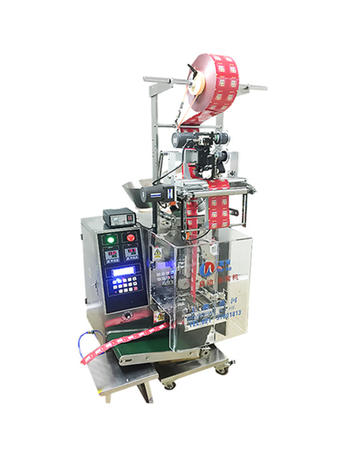
Tablet packing machines range from manual and semi-automatic models to fully automatic, high-speed systems. The right level of automation depends on labor costs, production volume, and quality consistency requirements.
Higher automation often means higher upfront cost, but it can significantly lower long-term operational expenses and reduce human error.
Accuracy is especially important in pharmaceutical tablet packaging, where incorrect counts or damaged tablets can lead to compliance issues and product recalls. Modern tablet packing machines use advanced counting technologies such as electronic sensors, vision systems, or multi-track counting channels.
Gentle tablet handling is equally critical. Poorly designed feeding or transfer systems can cause chipping, cracking, or dust generation. When evaluating machines, pay attention to vibration control, feeding mechanisms, and rejection systems for broken tablets.
A versatile tablet packing machine should be compatible with a wide range of packaging materials. This flexibility allows manufacturers to adapt to different market requirements without purchasing additional equipment.
| Packaging Format | Common Materials | Typical Use |
| Blister | PVC, PVDC, Aluminum | Pharmaceuticals |
| Bottle | PET, HDPE, Glass | Supplements |
Tablet packing machines used in pharmaceutical environments must comply with strict regulatory standards. Depending on your market, this may include GMP, FDA, or EU compliance. Machine design should support easy cleaning, validation, and documentation.
Features such as stainless steel construction, tool-free changeover, and clear access panels simplify cleaning and inspection. Compliance-ready machines reduce audit risks and improve long-term operational reliability.
Beyond the purchase price, the total cost of ownership should guide your decision. Reliable tablet packing machines are designed for easy maintenance, with readily available spare parts and clear service documentation.
Strong after-sales support, including training, remote diagnostics, and technical assistance, can significantly reduce downtime. Choosing a machine from an experienced manufacturer with proven support capabilities often delivers better long-term value than selecting the lowest-cost option.
The right tablet packing machine should not only meet your current needs but also support future growth. Consider whether the machine can be upgraded, integrated into a full packaging line, or adapted to new tablet formats.
A well-chosen tablet packing machine improves efficiency, ensures product quality, and supports regulatory compliance. By carefully evaluating your requirements, production goals, and long-term strategy, you can make a confident investment that strengthens your entire production line.
Copyright © Soontrue Huihe Automation Equipment (Shanghai) Co.,LtdAll Rights Reserved. Custom Packaging Machinery Manufacturers