英语
英语 西班牙语
西班牙语 简体中文
简体中文Industry News
Home / News / Industry News / How Does a Large Vertical Packing Machine Handle High-Volume Production Efficiently?
Content
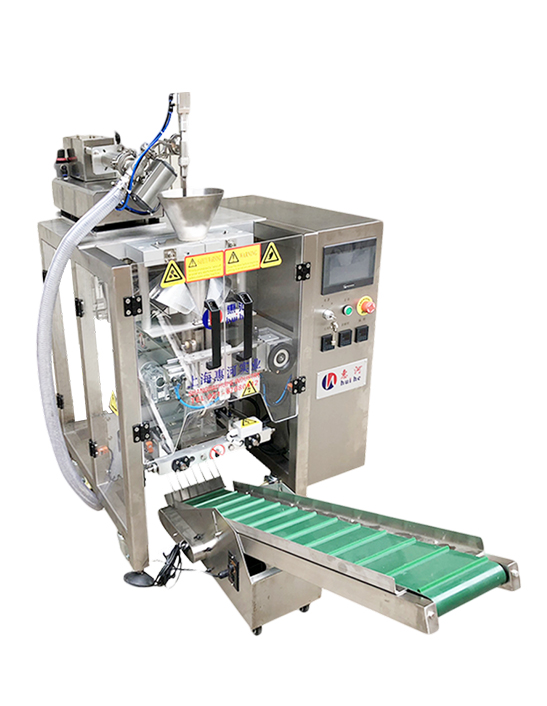
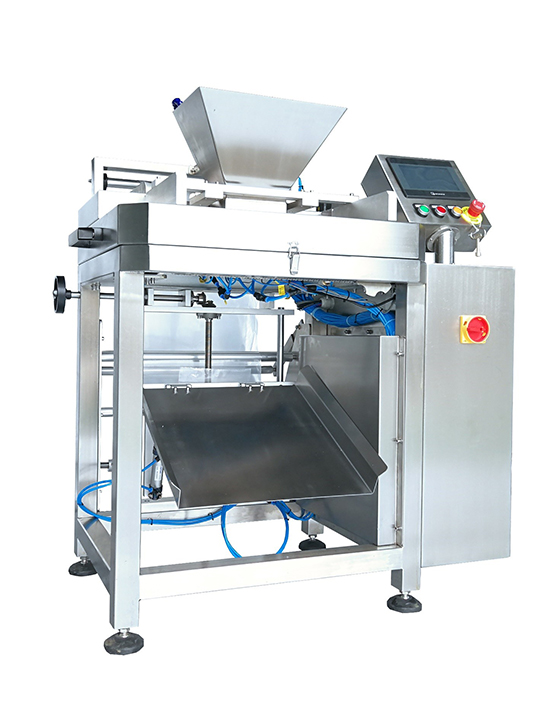
A large vertical packing machine, often referred to as a vertical form-fill-seal machine, is an industrial packaging system designed to form bags from a roll of flexible film, fill them with product, and seal them, all within a single continuous vertical process. These machines are widely used across food processing, agricultural, chemical, and consumer goods industries to package products ranging from snack foods and grains to fertilizers and hardware components at high volumes and speeds.
The term large in this context typically refers to machines capable of handling bigger bag formats, higher fill weights, or increased throughput compared to standard tabletop or small-scale packaging units. These larger systems are engineered to support the demands of high-volume production environments, where consistent bag formation, accurate fill weights, and reliable sealing are essential to maintaining production efficiency and product quality.
Understanding how a large vertical packing machine operates helps clarify why this technology has become the standard for high-volume bagging applications across so many industries.
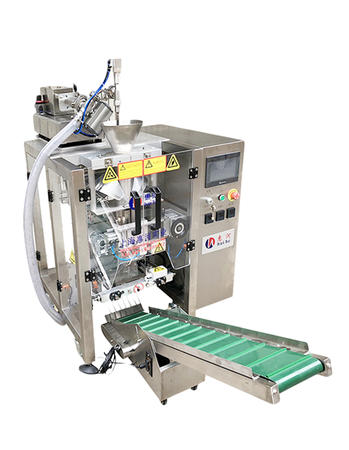
The process begins with a roll of flexible packaging film being fed vertically through a forming collar, which shapes the flat film into a tube. As the film passes over the forming collar, its edges overlap and are sealed together to create a continuous vertical seam, forming the basic tube structure from which individual bags will be created.
Once the tube is formed, product is dispensed from above, typically through a filling mechanism such as an auger for powders, a multihead weigher for granular or piece-count products, or a volumetric filler for consistent-density materials. The product drops down through the center of the forming tube into the bag cavity below.
After the product has been dispensed, horizontal sealing jaws close beneath the filled portion of the tube, simultaneously sealing the bottom of the new bag and the top of the previous one. A cutting mechanism then separates the sealed bags, allowing the finished product to drop away while the process continues uninterrupted for the next cycle.
Several critical components work together within a large vertical packing machine to ensure consistent bag formation, accurate filling, and reliable sealing at high production speeds.
The forming collar, sometimes called a former, shapes the flat film into a cylindrical tube as it passes vertically through the machine. Different bag sizes and styles require different forming collar dimensions, meaning that changeovers between significantly different bag formats often require swapping this component.
The vertical sealing mechanism creates the back seam of the bag as the film passes over the forming collar, while the horizontal sealing jaws create the top and bottom seals of each individual bag. Seal quality depends heavily on maintaining consistent temperature, pressure, and dwell time at these sealing stations, particularly for films with specific heat-sealing requirements.
The filling system used varies significantly depending on the product being packaged. Auger fillers are common for fine powders, multihead weighers excel at accurately dispensing free-flowing granular products or mixed-size items, and volumetric cup fillers are often used for products with relatively consistent density and particle size.
Modern large vertical packing machines incorporate programmable logic controllers that coordinate the timing between film feeding, filling, and sealing operations. Photo-eye sensors detect printed registration marks on the film to ensure accurate cutting and sealing alignment, particularly important for pre-printed packaging with specific graphic placement requirements.
Large vertical packing machines can produce several distinct bag styles, each suited to different product types and shelf presentation requirements.
| Bag Style | Characteristics | Common Products |
| Pillow Bag | Simple three-seal design, cost-effective | Snack foods, grains, powders |
| Gusseted Bag | Side folds allow for a flat base and more volume | Pet food, agricultural products |
| Flat Bottom Bag | Stands upright, larger footprint on shelf | Coffee, premium retail products |
| Stick Pack | Narrow, single-serve format | Powdered supplements, condiments |
Choosing the right bag style depends on factors such as intended retail shelf presentation, product density, and whether the package needs to stand upright for consumer display purposes.
The versatility of large vertical packing machines makes them applicable across a wide range of industries requiring high-volume, consistent bagging operations.
Each of these industries relies on the machine's ability to maintain consistent bag weight accuracy and seal integrity at high production speeds, minimizing product giveaway and reducing the risk of package failure during shipping and handling.
Choosing the right vertical packing machine for a specific production line requires evaluating several technical and operational factors beyond basic throughput requirements.
Production speed requirements, typically measured in bags per minute, directly influence machine selection, since higher-speed systems often require more sophisticated film handling and sealing mechanisms to maintain quality at faster cycle times.
Confirming that the vertical packing machine integrates properly with the required filling system, whether an auger, multihead weigher, or volumetric filler, is essential, since not all machines are designed to accommodate every filling technology without modification.
Facilities packaging multiple product lines with different bag sizes benefit from machines offering quick-change forming collars and adjustable sealing parameters, reducing downtime during product changeovers on shared production lines.
Many modern facilities integrate vertical packing machines with upstream weighing systems, downstream case packing equipment, and centralized production monitoring software, making compatibility with existing automation infrastructure an important selection criterion.
Regular maintenance is essential for keeping a large vertical packing machine running efficiently and minimizing unplanned downtime in high-volume production environments. Sealing jaws should be inspected regularly for wear or contamination buildup, since inconsistent sealing temperature or pressure is one of the most common causes of package failures in vertical form-fill-seal operations.
Film tracking and tension control systems should be calibrated periodically to prevent misalignment issues that can lead to inconsistent bag formation or registration errors with pre-printed film. Additionally, routine lubrication of moving mechanical components and timely replacement of wear parts, such as cutting blades and sealing jaw surfaces, helps maintain consistent production quality and extends the overall operational lifespan of the equipment.
Large vertical packing machines provide an efficient, reliable solution for high-volume bagging operations across a wide range of industries, combining film forming, product filling, and sealing into a single continuous process. By carefully evaluating throughput requirements, filling system compatibility, and changeover flexibility, manufacturers can select a machine that supports consistent production quality while minimizing downtime and operational costs over the long term.

Copyright © Soontrue Huihe Automation Equipment (Shanghai) Co.,LtdAll Rights Reserved. Custom Packaging Machinery Manufacturers