英语
英语 西班牙语
西班牙语 简体中文
简体中文Industry News
Home / News / Industry News / How Does a Toothpick Packing Machine Improve Efficiency and Hygiene in Production?
Content
A toothpick packing machine is automated equipment designed to count, arrange, and seal toothpicks into individual bags, boxes, or bulk containers without manual handling. These machines are widely used by toothpick manufacturers, restaurants supply companies, and hospitality product distributors who need to package large quantities of toothpicks quickly, consistently, and hygienically. Since toothpicks are small, lightweight, and typically packaged in large quantities per unit, manual packing would be extremely time-consuming and prone to counting errors, making automated packing equipment essential for commercial-scale production.
Most toothpick packing machines integrate counting, feeding, and sealing functions into a single continuous process, allowing manufacturers to move directly from bulk toothpick storage to finished, sealed packages ready for distribution. This level of automation significantly reduces labor costs while improving packaging consistency across production batches.
The core packing process generally follows a sequence of steps that ensures accurate counting and secure sealing, regardless of the specific machine model or packaging format.
Bulk toothpicks are loaded into a hopper, where a vibrating or rotating mechanism aligns them into a uniform orientation. Proper alignment is critical, since misaligned toothpicks can jam the counting mechanism or result in inaccurate package quantities.
Once aligned, toothpicks are divided into precise portions, often using either a mechanical counting wheel or an optical sensor system that detects individual toothpicks as they pass through a channel. This step determines the exact quantity placed into each package, whether that is a small retail sleeve of 20 toothpicks or a bulk foodservice box containing thousands.
After portioning, the counted toothpicks are transferred into a pre-formed bag or wrapped in film, which is then heat-sealed to create an airtight, tamper-evident package. Many machines also print batch codes, expiration dates, or branding directly onto the packaging during this final stage.
Different packing formats require different machine configurations. Understanding these variations helps buyers select equipment suited to their specific product presentation needs.
| Machine Type | Typical Output |
| Individual Sachet Packer | Single or small counts per sealed sachet |
| Bundle Wrapping Machine | Bundled sticks wrapped in film or paper |
| Bulk Bag Filling Machine | Large quantity bags for foodservice or resale |
| Box Filling Machine | Rigid retail boxes with fixed stick counts |
Individual sachet packers are commonly used by restaurants that provide single-use toothpick packets, while bulk bag and box filling machines are more common among manufacturers supplying wholesale distributors or retail chains.
Not all toothpick packing machines offer the same level of precision, speed, or flexibility. Buyers should evaluate the following features when comparing equipment options.
Since toothpicks are used directly in contact with food and often placed in the mouth, hygiene standards during packaging are particularly important. Automated packing machines significantly reduce the risk of contamination compared to manual handling, since toothpicks pass through the entire process without direct human contact after the initial bulk loading stage.
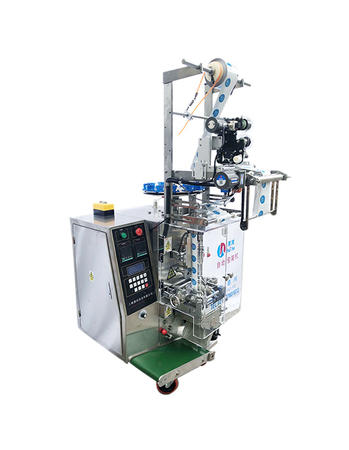
Manufacturers should ensure that all machine components in direct contact with toothpicks are constructed from food-grade stainless steel or approved food-safe plastics. Regular cleaning schedules and proper sealing integrity checks further help maintain compliance with food safety regulations applicable to the manufacturing region.
Routine maintenance helps prevent downtime and preserves counting accuracy over the machine's operational life. The following practices support consistent, long-term performance.
Selecting the appropriate toothpick packing machine depends largely on production scale and packaging format requirements. Smaller operations or restaurants producing custom-branded sachets may prioritize flexibility and lower initial investment, while large-scale manufacturers typically require high-speed, fully automated lines capable of running continuously with minimal manual intervention.
Before purchasing, buyers should request a demonstration using their actual toothpick specifications, since variations in stick length, diameter, and material can affect counting accuracy and feeding reliability. Confirming after-sales support and availability of replacement parts is also important, particularly for manufacturers relying on continuous production schedules where equipment downtime directly impacts output.
Copyright © Soontrue Huihe Automation Equipment (Shanghai) Co.,LtdAll Rights Reserved. Custom Packaging Machinery Manufacturers